The $200 Million Success of the Michael Jackson Movie Shows No One Is Ever Truly Canceled | Vanity Fair
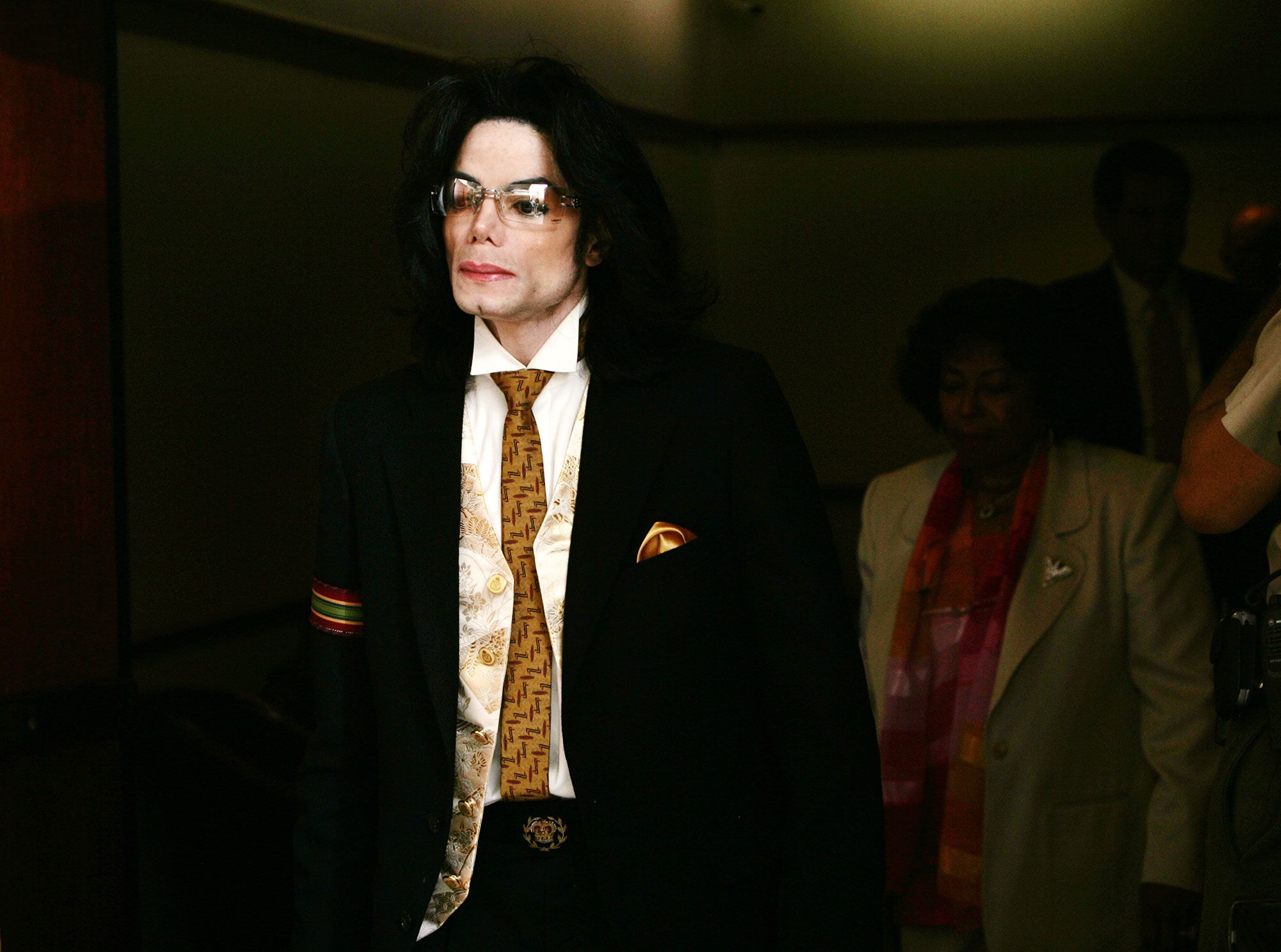
First, let’s establish two things. One: Michael, the biopic sanctioned by the Michael Jackson estate that opened Friday, is almost certain to make an enormous amount of money. The movie’s currently on track for a $100 million opening in North America alone, and could make $200 million (or more) internationally. And that’s just in its first weekend. These aren’t Thriller numbers, but they’re certainly healthy, particularly in the wake of several recent movies about musicians that crashed and burned both critically and commercially.
Two: Before the film went into production, at least five boys, now men, had credibly and publicly accused Jackson of sexually abusing them when they were between the ages of 7 and 12. Five more people—four men and one woman, all siblings—came forward with similar claims on April 24, 2026.
How can all of these things be true at the same time? Filmmaker Dan Reed has a simple explanation. “People don’t care that he was a child molester,” he told The Hollywood Reporter this week. “Literally, people just don’t care.”
He’s right. Reed’s 2019 documentary, Leaving Neverland, a four-hour accounting of the allegations against Jackson, is excruciatingly detailed and powerfully compelling. It’s difficult, if not impossible, to come away from the film without being convinced that Reed’s subjects, Jackson accusers Wade Robson and James Safechuck, are telling the truth. (Jackson, who died in 2009, denied all claims of sexual misconduct when he was alive. He was criminally charged with abusing a child but acquitted after a trial in 2005.)
Seven years ago, in a fugue of #MeToo-era righteousness, I edited Vanity Fair’s laudatory review of Reed’s film and gave our piece a headline that now seems painfully naive: “Leaving Neverland May Do What No Other Michael Jackson Exposé Could.”
It didn’t. As THR points out, Jackson might be more popular today than he was in the period before Leaving Neverland was released, when the allegations and the strange facts of the musician’s final years—the Martin Bashir interview, the dangled baby—were fresher in the public memory. The Broadway musical MJ—which, like Michael, conveniently covers only the period before the first Jackson accuser came forward in 1993—has grossed nearly $330 million since it began previews in 2021. Two years ago, according to a Jackson superfan on Reddit, the artist surpassed 50 million monthly listeners on Spotify for the first time. His monthly listener count has since climbed by nearly 20 million, and that’s without the bump that Off the Wall and Bad will likely get from Michael’s release.
Leaving Neverland, meanwhile, has vanished from the internet. Two years ago the Jackson estate successfully pushed HBO to remove the project from its streaming platform. In March of last year, Reed released a sequel on YouTube—but the original still can’t legally be viewed in the United States.
What conclusions can we draw from all this besides the obvious: that convincing, heart-wrenching testimony can’t move the needle if a critical mass is determined not to let it; that there is no alleged crime or scandal serious enough to turn fans against an artist they love, particularly if that artist has deep pockets and powerful lawyers; that despite all the hand-wringing and think pieces and endless, endless complaints on social media about frothing mobs yearning to draw famous blood, there really isn’t any such thing as “being canceled”—at least, not for those who are sufficiently beloved or connected?
There was a moment, almost nine years and one lifetime ago, when it seemed like things were really going to change. On October 5, 2017, The New York Times reported that Harvey Weinstein had spent decades paying off women he had sexually harassed. Within weeks, the floodgates opened. Headlines popped up like mushrooms after a storm, alleging misconduct by one well-known name after another. Kevin Spacey, who has denied the allegations against him, was removed from a movie he’d already finished filming and replaced with another actor; in a heretofore unprecedented act, Oscar nominee Morgan Spurlock canceled himself. The tide, it seemed, was turning. Behavior that had long been tolerated, if not encouraged, would no longer be accepted. Time was up.
Until it wasn’t. Practically as soon as the #MeToo movement began, it was accused of going too far—sweeping up innocents in its wake, failing to allow its targets due process. (Because the burden of proof required to secure a conviction must also be met by every single person outside a courtroom, in every circumstance, forever and ever. Amen.) Sure, some men were forced to resign or went to prison. But many weren’t or didn’t. And the most powerful among them, particularly those who didn’t face actual criminal charges, managed to put their head down, console themselves with their enormous bank account, and gradually reemerge into public life as though nothing had happened.
Which brings us to Michael, and the milieu that surrounds it. The last half decade has been lousy with post-“cancellation” comebacks, and this year seems to be the biggest one for them yet.
Johnny Depp, whose ex-wife Amber Heard has accused him of assault, hasn’t made a major studio movie since 2018—but he has one out in November called Ebenezer: A Christmas Carol, set to be released by Paramount. In May, Louis C.K. will headline a show at the Hollywood Bowl for the Netflix Is a Joke festival. John Lasseter, who was hired by David Ellison not long after being ousted from Pixar, produced Oscar winner Brad Bird’s upcoming animated feature, Ray Gunn. Woody Allen has secured financing for his next movie; actors like Scarlett Johansson and Javier Bardem have publicly reiterated their support for him.
In certain circles, Jeffrey Epstein has been reborn as a style icon. Brett Ratner is earning healthy paychecks for directing state-sanctioned Trump-family propaganda and a fourth Rush Hour movie allegedly requested personally by the president himself. Speaking of: Donald Trump is president again! Like, right now! (Louis C.K. admitted to sexually harassing women in 2017; all other accused men in this paragraph and the one above have denied wrongdoing and the allegations against them. In 2022, Depp and Heard both won compensatory damages after filing competing defamation lawsuits.)
Even Weinstein, who was convicted of rape in New York in 2020 (and found guilty on three sex crime charges in Los Angeles in 2022), may yet have a second act. The verdict of his first New York trial was overturned in 2024, leading to a new trial in 2025 (which resulted in a conviction on one charge, an acquittal on a second charge, and a hung jury on another charge) and a third trial that began this week. “I won’t apologize for something I didn’t do. I will be proven innocent. That I promise you,” the former mogul, who has long denied any wrongdoing, told THR just last month. “I won the last appeal. I’ll win this one too.”
He has reason to be optimistic. Bill Cosby, the alleged predator most often mentioned in the same breath as Weinstein, saw his own sexual assault conviction overturned in 2021. Cosby’s plans for a 2023 comedy tour didn’t come to fruition—but maybe that’s only because he was waiting for the great wave of ’26.
The large-scale return of the supposedly canceled can’t be blamed on collective amnesia, or even a public that clings to plausible deniability. Nor are the masses grappling with cognitive dissonance as they try to separate art from the artist. There seems to be very little guilt at play.
Instead, Occam’s razor suggests that the people in charge and civilians alike know what these men have allegedly done, and they just do not care. They look at Michael Jackson and, like Dave Chappelle in an old sketch, they shrug: “He made Thriller. Thriller!” (By the way: Despite what he may have told you, Chappelle has never actually been canceled either. He’s released a special on Netflix every other year since 2017, including and since the one in which he made the transphobic jokes that inspired a company-wide staff walkout in 2021.)
This outcome has clearly frustrated Dan Reed, but he has stopped short of condemning it. “I’m not trying to stop anyone from consuming his music. I’ve never advocated canceling Michael Jackson. Book burning is for the Middle Ages and the Taliban,” he said in the THR interview. “I just think if you’re going to enjoy his music, let’s also consider the fact that he liked to have sex with children and see how that affects your enjoyment.” What recourse is there for those who do care, other than resigned acceptance and a bit of gallows humor?
Inside the Tony Dokoupil Era at CBS
Why the Washington Press Aren’t Sweating Kash Patel’s Lawsuit Against The Atlantic
It Was Only a Matter of Time Before the Missing Scientist Theories Hit the White House
10 Undeniable Facts About the Michael Jackson Sexual-Abuse Allegations
A Style History of “Nerd Prom”: The White House Correspondents’ Dinner
11 Memorable Moments in the History of the White House Correspondents’ Dinner
Exclusive: Queen Elizabeth’s Never-Before-Seen Portrait, Unveiled
The Curious Case of the Missing Cocaine…Cover
The Wretched Rise of Toxic Fandoms
Meet the Man Who Will Get Inside Trump’s Mind
From the Archive: The Rise of Michael Jackson