CNN Correspondent Provides Inside Look at Ebola Outbreak in Democratic Republic of Congo | Vanity Fair
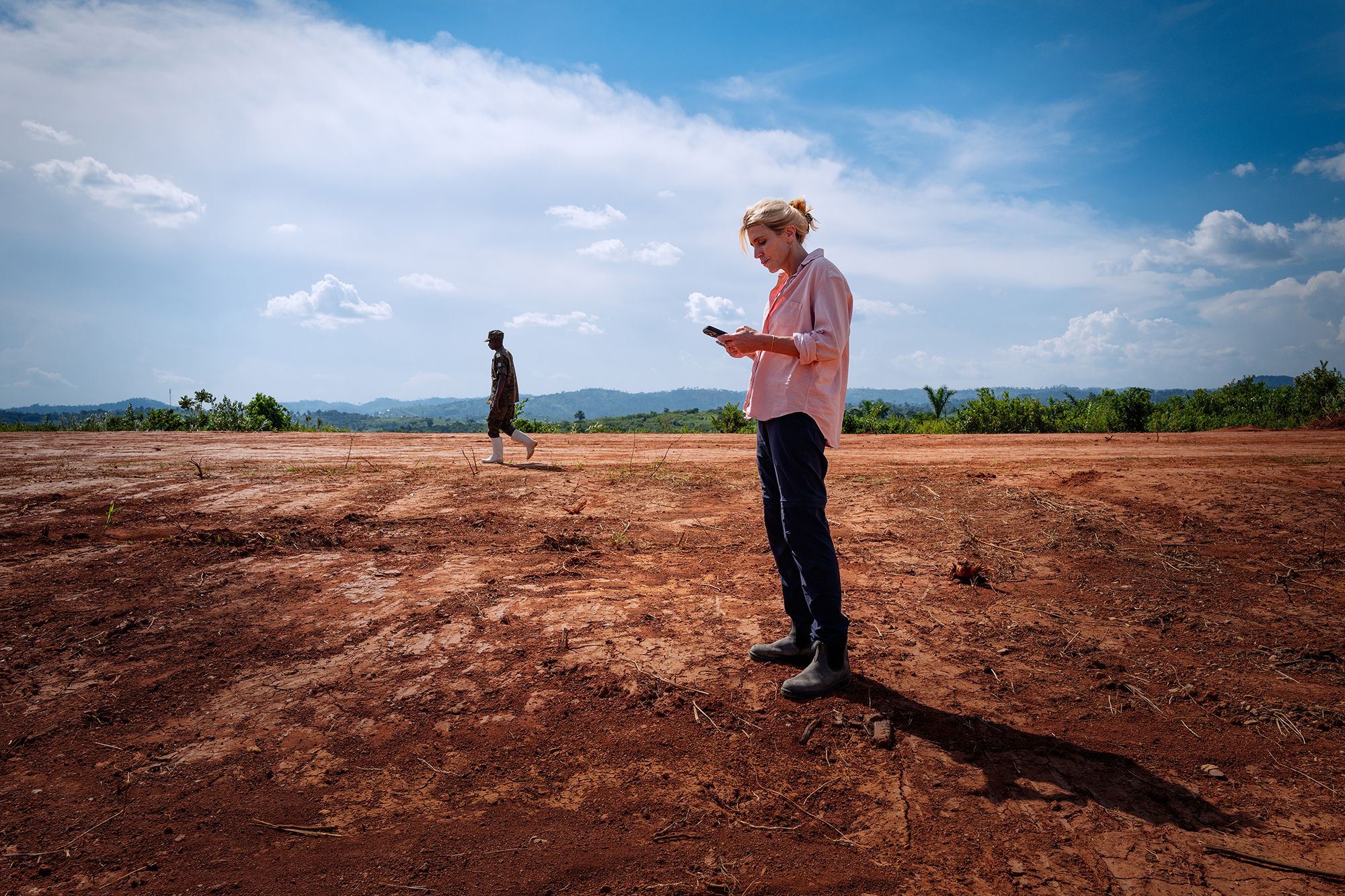
“So on my first day here, I’m sitting in the car and I hear this song,” Clarissa Ward says from Bunia, the capital of the province that’s the epicenter of the Democratic Republic of the Congo’s latest Ebola epidemic.
“Ebola, Ebola,” the CNN journalist sings, recreating the tune she heard on the radio.
“Is this a song about Ebola?” she recalls asking her driver, thrown off by its upbeat sound. The driver explained that the song was a public safety announcement, offering directions for social distancing during the outbreak. The radio, Ward says, is one of the country’s most effective tools for disseminating public health information in a region where about 80% of adults are literate and only 22% have access to the internet.
Those limited communication channels are among the many obstacles the DRC faces as it fights its 17th—and potentially largest—Ebola outbreak. USAID has been devastated, the World Health Organization is underfunded, and unlike its predecessor, the Zaire strain, this new Bundibugyo Ebola virus has no vaccine or treatment. Diagnostic testing is now available, but labs are so overwhelmed that the return of results can be delayed. That means makeshift wards are forced to house patients who may not even have Ebola alongside those who do, potentially infecting more people. The virus is spreading through a region where most people live in poverty, where conflict is ongoing, and where much of the population is transient, traveling across borders for work in industries like mining.
And yet what sounds like an absolute nightmare, Ward says, is actually a much quieter picture of human suffering on the ground.
“I think people have in their mind that it’s going to be out of a zombie movie,” Ward says. “And no, it’s not like that. It’s quieter. People that we saw, they really barely had the strength to say two words, but you can see how much they’re suffering. They’re really in pain and they’re really scared.
“When you’re actually in these tents in the red zone with these people and seeing it up close and hearing their stories, it just gives it a very different, very human perspective.”
A CNN team traveled to the DRC to report on the ground.
She describes meeting a 10-year-old boy who was recovering from Ebola. When he arrived at the hospital, he was bleeding and in a coma. Now he’s awake and speaking, and his mother, who has seven other children at home, has spent the last week camped outside the hospital, waiting for him. He has had to fight for his life alone, separated from her throughout.
When I ask if she’s scared of catching Ebola, Ward recalls her flight to the DRC on a United Nations charter. “You just have to operate [on] a no-touching policy,” the aid workers she sat with told her. “You do not touch anyone.” On top of that, they instructed her to wash her hands and use sanitizer after touching any surface, and at any possible opportunity. “If you keep doing that,” the aid workers told her, then “you would be astonishingly unlucky to get Ebola.”
“That, for me, was surprising, because I haven’t covered an Ebola outbreak before and I didn’t know enough about the virus, in all candidness,” Ward says. She notes that “there’s a level of fear in the West about Ebola that is not actually totally proportional to the reality of it, which is not to say it’s not scary and horrific. It is very much both, but there are really a lot of sensible measures that you can take to protect yourself, and there are a lot of steps that can be taken, more broadly, to play catchup with it and stop it in its tracks.”
The local government, she says, has a plan to end the outbreak within three months—a timeline that feels frustratingly long, but it’s encouraging to have a timeline at all.
“It’s very different to COVID,” Ward adds, explaining that, unlike COVID-19, Ebola is neither airborne nor transmissible before a person begins showing symptoms.
Health workers carry the coffin of a person suspected of having died from Ebola in Bunia, in the eastern Democratic Republic of the Congo.
The dead remain infectious, however, a fact that has collided with local funeral traditions, which involve large gatherings and handling the body. “The custom here is to touch your loved ones before you lay them to rest,” Ward says, “and they feel like, especially in some of these rural areas, their loved one went in sick to the hospital and then they never saw them again.” Hospitals have had no choice but to refuse to release bodies to families, in some cases triggering uprisings. On Wednesday, Ward and her team traveled to Mongbwalu, a small gold-mining town where, last month, angry residents burned down a quarantine facility. Patients who had been inside fled, potentially infecting others.
Information, Ward believes, is critical on both fronts: tamping down sensationalism in Europe and the Americas while educating people in affected regions about how to limit the spread and protect themselves.
“There are a lot of conspiracy theories here. Basically, that Western aid workers, particularly—there’s a lot of mistrust and suspicion, and in some cases outright hostility,” she says, adding: “We’re there with our camera, like, ‘Hey.’”
Most people she’s met, however, are “really happy to have their story told and to feel like the world is paying attention.”
Our Final Winner Predictions For the 2026 Tony Awards
What Reading Martha Moxley’s Haunting Diary Reveals Now
How a Male Supermodel Escaped a Manhattan Socialite’s Cult
Noah Wyle Defends Dr. Robby’s Fall From Grace
I Was the Face of New York Magazine’s Controversial, Andrew Cunanan–Inspired “Trophy Boys” Cover Story
A Guide to All the New Openings in the Hamptons This Summer
How Flesh-Eating Bacteria Is Invading the East Coast’s Swankiest Waterways
The 25 Best Movies to Watch on Netflix This June
10 Undeniable Facts About the Michael Jackson Sexual-Abuse Allegations
From the Archive: The Man Who Kept Marilyn’s Secrets