Why We Can't Let Go of Mr. Darcy: The Enduring Allure of Pride and Prejudice | Vanity Fair
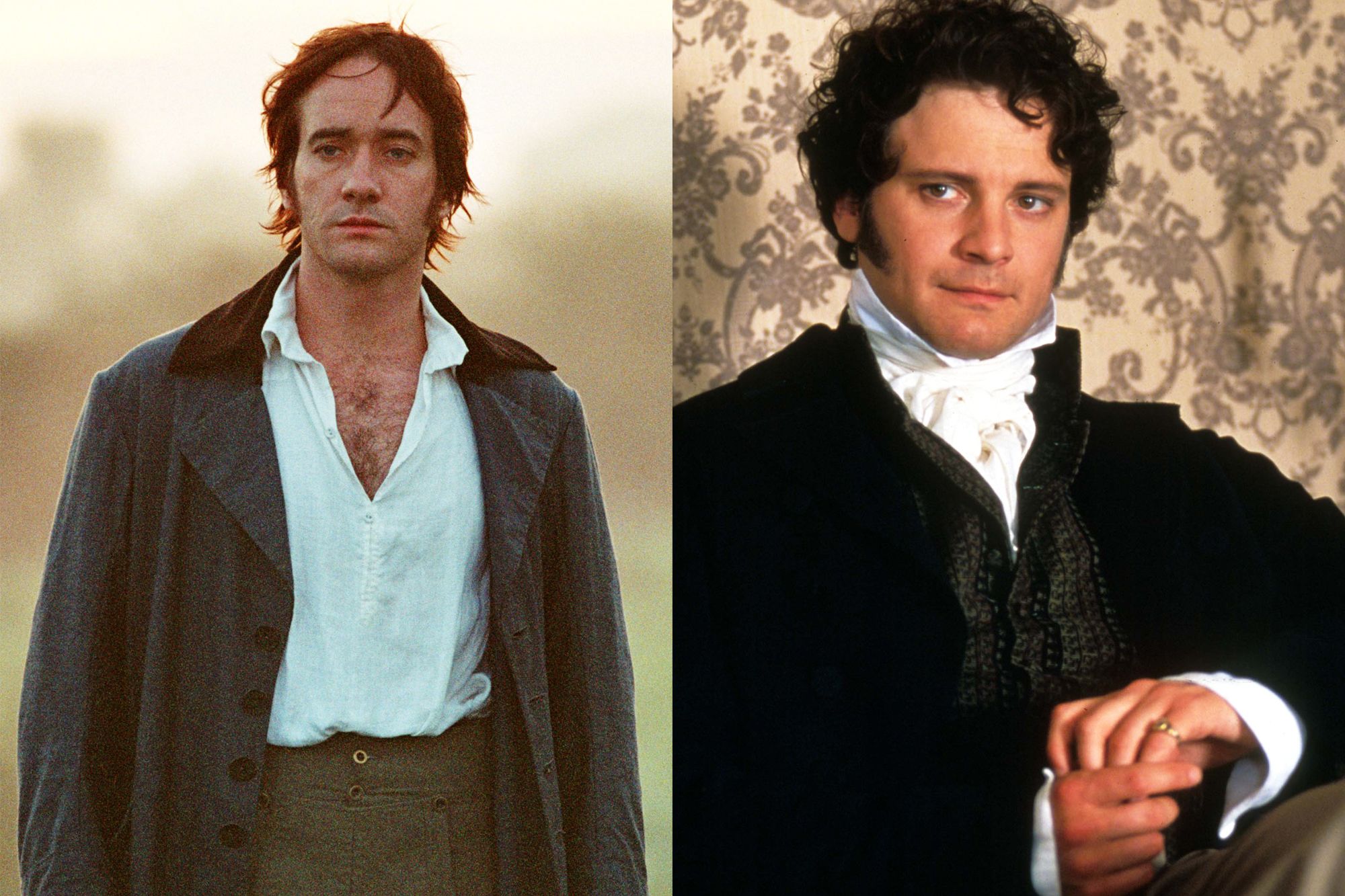
Fitzwilliam Darcy is, at the outset, insufferable. He is rich and he knows it, proud and he shows it. When he finally declares his love for Elizabeth Bennet in Jane Austen’s Pride and Prejudice, he does so while essentially itemizing her shortcomings as though filling out a damage report. “I want you, despite everything that is wrong with you.” She turns him down cold. Readers have been cheering her ever since.
And yet.
Two centuries later, Mr. Darcy has become an industry. He has been Colin Firth in a wet shirt, Matthew Macfadyen in the rain, the brooding template for approximately half the romantic heroes currently populating streaming queues. There’s even a new Pride and Prejudice coming to Netflix this fall, starring Emma Corrin as Elizabeth and Jack Lowden as her nemesis turned suitor. The mood boards have shifted—Regency waistcoats giving way to corner offices and cashmere suits—but the character underneath remains identical: the man who is arrogant, aloof, proud, certain of everything until a single woman dismantles him with a sentence.
Bookshop
Amazon
We say we’ve moved on, that we are sophisticated now. We know our attachment styles, we now know better than to confuse potential with character, and we understand, in a way previous centuries perhaps did not, that the “I can fix him” fantasy has a considerable body count.
And then we watch the lake scene again.
Here is the thing the cultural shorthand around Darcy consistently flattens: He does not get fixed. Not by Elizabeth, love, or the civilizing influence of a good woman doing invisible emotional labor. She does not fix him. She refuses him—forensically dismantles his character to his face—and walks away. There’s no softening or lingering in the doorway; she simply tells him the truth.
What happens next is the whole story. And Austen, being Austen, delivers it with characteristic understatement. Darcy goes home. He thinks. He writes Elizabeth a letter that is, in its quiet way, one of the most remarkable documents in the English novel—not an attempt to win her back, not wounded self-defense, but an accounting of himself. He replays what she said and decides, without an audience and without any guarantee of reward, that she was right.
This is not a soft man being softened by love. This is someone undergoing a genuine moral reckoning and choosing to be different because the evidence demanded it. In a genre crowded with brooding men who are merely waiting to be unlocked by the right woman, this distinction is everything.
His finest act in the novel happens almost entirely out of frame. When Lydia Bennet’s catastrophic elopement threatens to ruin the family, Darcy intervenes—pays the debts, arranges the marriage, quietly absorbs the cost—and tells no one. What this requires of him is worth pausing on. He must negotiate with George Wickham, a man who has lied about him publicly, attempted to seduce his sister, and is now holding an entire family’s reputation to ransom. He must pay him, settle his debts, fund his commission, essentially reward him for his behavior—because it is the only way to repair the damage. The man who proposed to Elizabeth while cataloguing her family’s social deficiencies is now spending his own money to protect that family, on the instruction of no one, with no guarantee she will ever find out. Elizabeth learns about it secondhand, through her aunt’s letter, the way we learn about genuinely significant things: late, and from someone else. No credit. No reciprocation guaranteed. Just the thing done because it needed doing.
Contemporary romantic culture—the podcasts, the movies, the relentless vocabulary of green flags and secure attachment—tends to prescribe finding someone who already has their house in order. Someone who has done the work, as we say, as though emotional maturity were a renovation project with a clear completion date. This is not unreasonable, as the alternative has caused real damage to real people. The women who spent years translating coldness as depth, who mistook unavailability for mystery, who held onto the faith that patience would eventually produce a different person—they are not cautionary tales. They are the reason this advice exists, and the advice is correct, as far as it goes.
But what Darcy offers is different from that fantasy, and it’s a difference worth being precise about. The fantasy that is rightly interrogated is one in which you are the catalyst—where the cold man’s warmth becomes your personal achievement, his transformation a tribute to your particular patience or insight. Darcy’s transformation has nothing to do with that. Elizabeth isn’t actually there when it happens: She doesn’t witness it, doesn’t enable it, doesn’t wait around hoping for it. It happens in private, at cost, because he took what she said seriously and found he could not dismiss it.
The rarest thing, in fiction as in life, is not someone who is already good. It is someone who discovers they’ve been wrong—and does not immediately begin rewriting the story to restore themselves to the hero position. Someone who can be seen clearly, and who can resist the urge to defend themselves.
Darcy can tolerate being seen. Eventually, painfully, he invites it.
More than 200 years later, the entailments are gone, nobody needs rescuing from an inheritance law, and the ranked list of Darcy qualities his admirers carry—intelligence, steadiness, the confidence that doesn’t need to announce itself—has been quietly updated. “Ten thousand a year” has slipped down the rankings; “emotionally available” has taken its place. The list has been revised. The fantasy beneath has not, because what it’s really pointing toward has never been about the estate or the era.
What we keep returning to, in every Pride and Prejudice adaptation and reimagining, is the possibility of someone who can hear that they’ve been genuinely, uncomfortably wrong—and choose, quietly and without an audience, to become different. Not because they were worn down. Not because the circumstances forced it. Because someone told them the truth and they decided to take it seriously.
That is what the list is for. That is what it has always been for.
And we are, it turns out, still looking.
Blackpink’s Lisa Pulls Back the Curtain on the Life of a K-Pop Showgirl
Katseye Is Ready to Talk
What Ever Happened to Marvel’s Wunderkind X-Men Showrunner?
Taylor Swift’s Wedding, According to Prediction Markets
How Garth Fisher Became the Go-To Plastic Surgeon for the West Coast Elite
Why The World Ignores Genocide in Sudan
How Paul R. Williams Put His Stamp on Los Angeles and Beyond
Exclusive: Trouble Behind the Scenes at Alex Cooper’s Media Empire
From the Archive: The Perks and Perils of Being Donald Trump’s Daughter