First Glimpse: 'Monster: The Lizzie Borden Story' Reveals Photos, Interviews, and Release Date | Vanity Fair
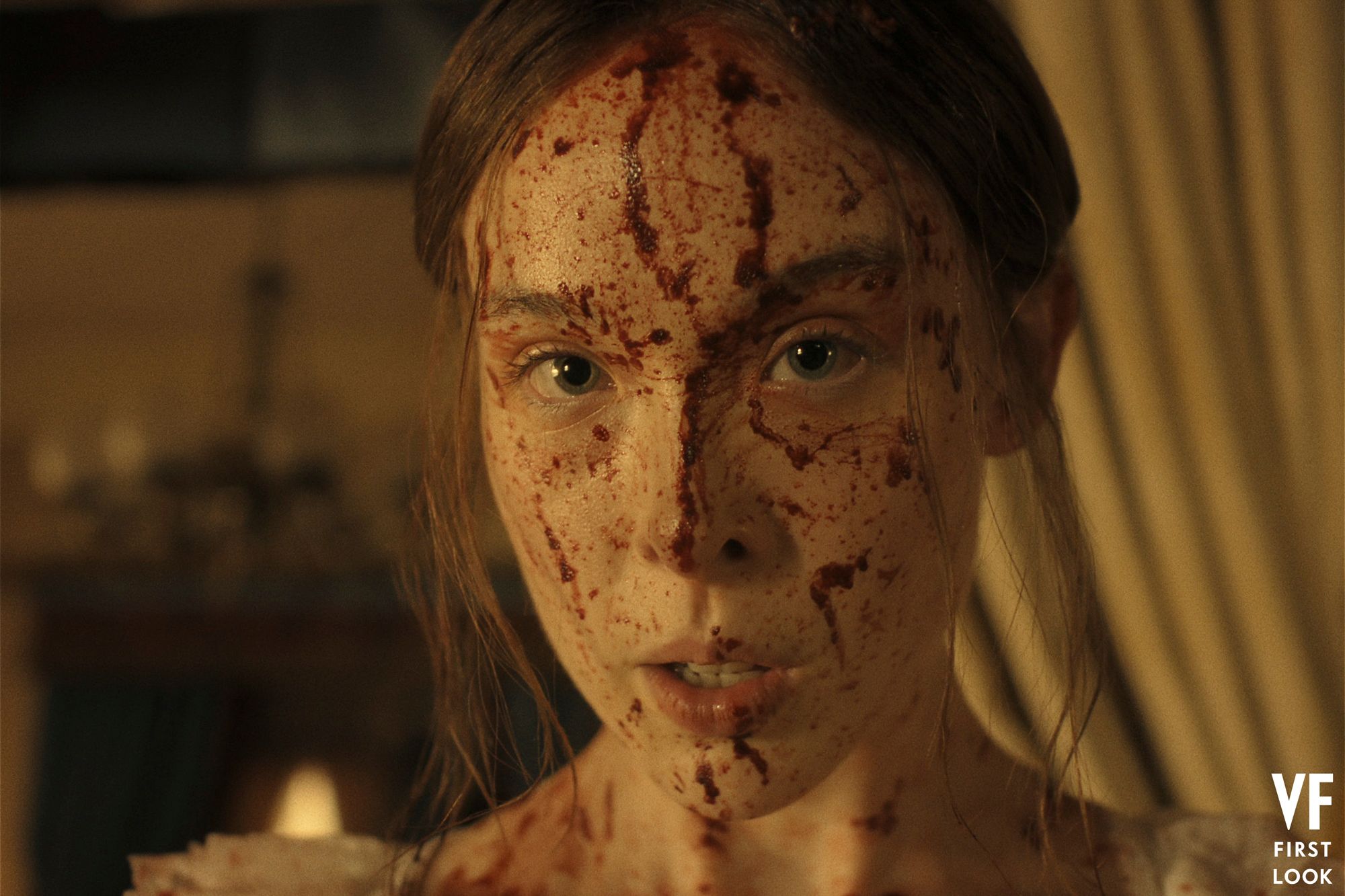
Monster: The Lizzie Borden Story, the next season of Ryan Murphy’s anthology series, is the first installment to focus on a famous murderess (following seasons about male killers Jeffrey Dahmer, Ed Gein, and the Menendez brothers), who is also the show’s only alleged perpetrator to get away with her crimes in a court of law.
Those milestones are intertwined, says series cocreator Ian Brennan, and at the heart of what he hoped to explore with this iteration of Monster. “They literally thought that a woman was too weak to pick up an axe…. To be a woman in that period was to be almost a completely different species. You were treated like you were incapable of not only actions, but the thoughts that a man was capable of,” he tells Vanity Fair in his first interview about the series.
In 1893, Sunday school teacher Lizzie Borden was tried for allegedly murdering her father and stepmother with an axe inside the family home. After deliberating for just over an hour, the all-male, white, Protestant jury unanimously decided that 32-year-old spinster Borden didn’t commit a brazen daytime double homicide. The jurors ventured that someone else must have delivered the 40 whacks that killed her father, 69-year-old Andrew Borden (played by Charlie Hunnam), one of the richest businessmen in Fall River, Massachusetts, and his 64-year-old second wife, Abby Borden (portrayed by The Beauty’s Rebecca Hall). The crime was never solved, but its sordid details have lodged themselves into the American psyche, spawning multiple screen adaptations, including a 2015 Lifetime series with Christina Ricci and a 2018 film starring Kristen Stewart. “Lizzie Borden is a famous story that everyone knows and nobody knows,” says Brennan. “It feels very ‘Legend of Sleepy Hollow’ but is real.”
Buyer, beware: This isn’t your great-great-grandmother’s version of the Victorian-era mystery. The eight-episode series, debuting on Netflix on September 17, has a darkly comic tilt and features modern needle drops from Kate Bush, Wet Leg, and UK riot grrrl/electro-punk duo Lambrini Girls, whose song “Cuntology 101” plays during a sequence involving an attempted poisoning at the Borden household. As in seasons past, episodes will explore the motives potentially lying behind the accused’s madness. “It was a tough time to be a rudderless young woman, and in a house that didn’t seem happy,” says Brennan. “The big question the anthology always asks is: Are monsters made or born? With Lizzie, if she’s a monster, she wasn’t born that way.”
In the titular role is Ella Beatty, who made her TV debut in 2024’s Feud: Capote vs. the Swans as Kerry O’Shea, the daughter of Truman Capote’s lover. “I was familiar with the nursery rhyme,” she says. “Truthfully, I like true crime because of the tea element, but I’m kind of a scaredy cat in real life.”
But her nerves weren’t evident to director Max Winkler, who was in the middle of shooting the first episode of the Murphy-produced Love Story: John F. Kennedy Jr. and Carolyn Bessette when he got involved in Lizzie Borden. Instead, Winkler felt from Beatty “an incredible amount of vulnerability, only second to an incredible amount of strength,” in her audition. “You knew that she could play both parts: the Lizzie that we meet in the pilot and then [the one] you see in the second episode.”
A flip gets switched when the repressed and reviled Lizzie, labeled an old maid by society and her rotten family, has her life’s one joy—the birds she tends to in the backyard—slaughtered by her evil stepmother. “It’s Ryan Murphy does Cinderella,” says Hall, describing, with a sly grin, her Abby Borden as a cross between “Faye Dunaway in Mommie Dearest and Vivian Pickles in Harold and Maude.” “There’s something truly liberating about playing someone who’s just off-the-wall crazy and behaves without any care for human frailty.”
To bring the character to life, Beatty relied on her weathered copy of The Trial of Lizzie Borden, plus the example of her famous parents, Annette Bening and Warren Beatty, who fell in love on the set of the Oscar-winning 1991 biopic Bugsy. “I’m so lucky because my mom is such a brilliant artist. My dad as well, of course,” the younger Beatty says. “From when I was a very little girl, I watched their artistry—the side that happens at home when it’s not necessarily visible to the world. I absolutely have many memories of being sidled up to my mom, watching her go over material.”
As for taking on her first leading role onscreen, “I was equally intimidated every day, but also the pursuit of it is a good place to be in as an actor,” she tells me. “I hope I stay feeling challenged forever, and I felt challenged in the best, most satisfying way on Monster.”
If Lizzie is Cinderella, then actor Vicky Krieps’s Bridget Sullivan, the Bordens’ live-in maid, is her fairy godmother. But instead of employing a ball gown, glass slippers, and a grand carriage made from a pumpkin, the renegade maid comes to her damsel in distress armed with a different kind of escape plan—one involving an axe and a double parricide. “The way Ryan thought of it, she’s almost like a Mary Poppins that comes out of nowhere,” Krieps says, “who can be anyone from any time…. Ryan said, ‘It’s women-driven, feminist, lesbian, dirty, unapologetic.’ You immediately felt almost a psychedelic, Courtney Love kind of vibe in the whole thing.”
Krieps likens Bridget’s arrival at Lizzie’s doorstep to a visit from the future—one where women can wear wolf cuts (an on-trend cross between the shag and mullet hairstyles) and forego heeled shoes. “In the beginning, her look was really almost punk…. I refused a corset,” she explains. “Because if she’s the future, I want her to move like the future. And in order to move like the future, you can’t just be stiff like a candle.”
In the series, Bridget and Lizzie bond over their outsider status, which leads Bridget to educate the younger woman about everything from societal movements to sex. (In this warped fable, the fairy godmother’s magic wand is an early wooden prototype of a dildo.) “For a person who’s been so repressed and sheltered, it feels so liberating to meet someone who…has a more evolved, modern sensibility,” says Beatty. “Vicky was the perfect person to play that part because she’s so magnetic and compelling…. She’s different from anyone I’d ever really met before.”
Monster: The Lizzie Borden Story is a female-focused season of TV that is largely written and directed by men. “I was afraid [because]…it wasn’t written by a woman,” Krieps admits. “And yes, I could tell, to be honest with you.” The actor says she often became “the adviser for feminist questions” during filming. “I always told them, ‘Okay, guys, from the women’s perspective, this cannot really work. Or a woman, in order to be, let’s say, sexually aroused, they have certain things that need to happen.’”
Winkler, the director son of actor Henry Winkler who has helped helm multiple Murphy projects, is the first to admit his gender’s shortcomings. “Men are idiots. Our understanding of hymens and periods and ovulation is so deeply limited to how it affects us,” he tells VF when asked about Krieps’s remarks in a separate interview. “My secret weapon was being surrounded by really, really smart women, both in front of and behind the camera, and trusting them…. Vicky is my North Star,” Winkler adds. “She can immediately feel if something feels fake or wrong or inauthentic or male-skewed. And she has a lot of opinions, but every single one of them is right.”
For example, Krieps insisted that “some Christian book written by a man” on Bridget’s nightstand be swapped for something the progressive woman might actually read. “You can feel the frustration of everyone—‘Oh, now we have to stop the train, and we all want to go home, and now she questions the whole scene,’” Krieps recalls. “But at the end of the show, everyone loved me for it. So that was a beautiful experience, and it showed me…well, we should speak up for ourselves.”
After all, it was Bridget and Lizzie’s ability to successfully rage against the machine that initially drew Krieps into this season’s tangled web. “One of the first things that got me on the project was when Ryan said, ‘They actually used that against the system to not only get away, but get away with the money,’” Krieps exclaims. “That’s just the best plot!”
In lieu of official answers regarding the Borden murders, Monster posits that money was a motivator for its version of Lizzie. Since no will stating otherwise was ever found, if Lizzie’s father, Andrew, predeceased his wife, then her stepmother was to inherit his fortune, while the two spinster daughters would receive nothing. But who is the Prince Charming waiting for Lizzie’s Cinderella on the other side of her escape? Look no further than Krieps’s freethinking housemaid, Bridget.
Through Lizzie and Bridget’s budding romance, Monster endorses a theory floated in the 1984 novel Lizzie by author Evan Hunter: that the two were involved in a lesbian affair that was discovered by Abby Borden, who reacted with disgust and, in doing so, signed her own death certificate. “There’s some adage—absence of evidence is not evidence of absence,” Brennan says with a chuckle while discussing the actual nature of their relationship. “It just screams Boston marriage to me…and it seemed too rich to ignore. I felt like we were ethically and morally excused to take that for granted. I think it’s one of the smaller leaps that we take in the show.”
There’s an upperclassman-underclassman nature to Lizzie and Bridget’s quietly electric dynamic, “a blossoming of sexuality…that does feel a little bit Glee,” says Brennan, who met TV mogul Murphy when the two reworked Brennan’s dark coming-of-age script about a Midwestern show choir back in the mid-2000s. That’s not the only trace of the Emmy-winning network comedy—some of the cutting lines written for Abby Borden feel as if they’d be right at home in the mouth of Jane Lynch’s Sue Sylvester. “To have that sort of dexterity with language, coupled with that instinct toward sadism, makes for such a powerful, big character,” Hall agrees. “I’ve never really been allowed to be let completely off the leash like that. So I chewed it up, as they say.”
I ask Brennan if Glee, which ended its six-season run on Fox in 2015, is due for a reboot, as Murphy suggested during a recent interview. “I’m very much in favor,” Brennan reveals. “For the longest time, I was like, Why? Why would we? But then recently, I’ve been much more excited about the prospect. There’s been a generational ripening where it now feels at once not too soon or too late. Watch this space.”
Brennan’s first show—no stranger to backlash for its frank exploration of adolescent sexuality and mental health, among other things—may have prepared him for the mania around Monster. With each new season, there has been backlash to creative choices made in the dramatizations of these true crime stories. “This anthology [series] always pushes buttons and that’s fine,” Brennan says. He’s sure to push a few more with the show’s deployment of other famous female serial killers—a nod to the cyclical nature of American true crime. “The Menendez brothers were informed by the [1987 crime caper] Billionaire Boys Club…. Ed Gein shows up first in Dahmer. These things actually exist in dialogue with one another,” explains Brennan.
That tradition continues in Monster: The Lizzie Borden Story, with future episodes depicting other female killers who have fascinated the world—like the Sarah Paulson–portrayed Aileen Wuornos, a convicted serial killer who murdered seven men in Florida between late 1989 and 1990. “It’s such an unexpected breath of fresh air when Aileen shows up,” Brennan promises. “Sarah Paulson’s good in a production of reading the phone book. But she really is something else in this show.”
As Lizzie Borden prepares to meet a 2026 audience, her show’s cast and creators are eager for viewers to see how little progress there’s been in regard to the ways in which society views women. “Not much has changed. You see Andrew Tate in the news—that whole sect of the internet,” says Winkler. “It’s shocking…just how archaic this country’s relationship with women still is.”
RFK Jr.’s Cooking Show Is Even More Bizarre Than You Could Imagine
The “No-Makeup Makeup” Look Is On the Way Out
Andrew Tate Was the Toast of Trumpworld. Has That Changed?
A “Top One Percent” Vagina Is the Newest Status Symbol in Longevity Circles
How I Blew Up My Life. (Or, the Gavin Newsom Affair)
Jeffrey Epstein’s Survivors, in Their Own Words
The 25 Best Movies on Netflix to Watch This August
The 10 Biggest Odyssey Updates From Homer’s Original Text to Christopher Nolan’s Latest Film
An All-American Tragedy: The Story of Brandon and Candice Miller
From the Archive: What Katie Holmes Didn’t Know