The Evolution of Hair Acting: Featuring Sarah Pidgeon, Cameron Diaz, and Julia Roberts | Vanity Fair
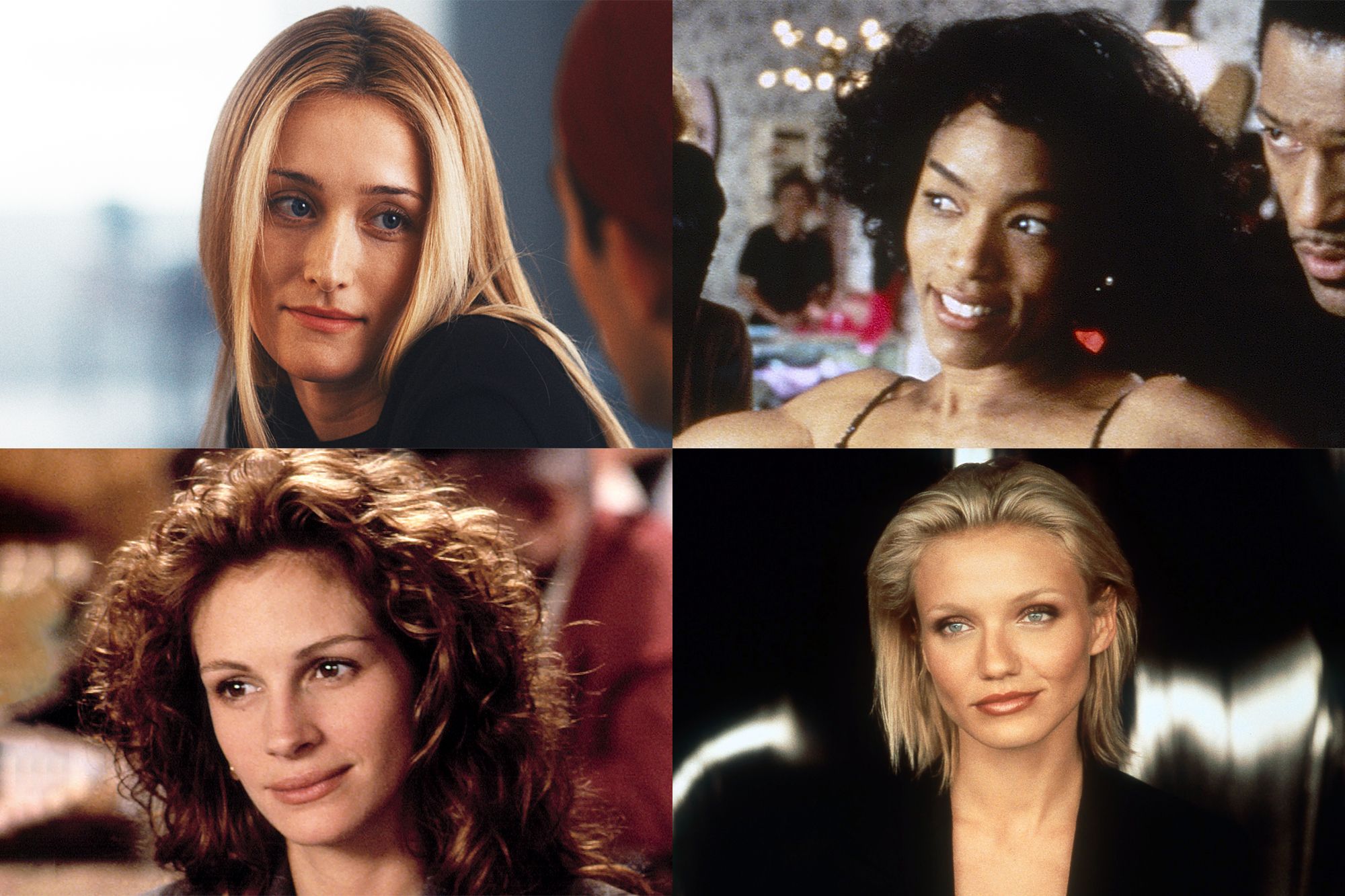
FX’s hit miniseries Love Story: John F. Kennedy Jr. and Carolyn Bessette brought the cool, understated glamour of the ’90s back to our TV screens—and introduced wider audiences to the mesmerizing Sarah Pidgeon.
The actor, who plays Carolyn Bessette as she’s swept into a whirlwind romance with John F. Kennedy Jr., became something of an overnight style icon, much like her character. Part of Pidgeon’s appeal is the way she wears Bessette’s iconic wardrobe, a minimalist dream of black slip dresses, bootcut jeans, and sleek trench coats. But it’s also that long blonde hair.
Hair, often dismissed as merely aesthetic, can be a key expressive tool in the right hands. For Pidgeon, it’s that effortless cool-girl hair flip. For Sarah Jessica Parker, it was Carrie Bradshaw absentmindedly winding her curls around a finger as she thought deeply about love. Alicia Silverstone gave Cher Horowitz’s playful flicks of blonde hair just enough airheaded charm to disguise the character’s razor-sharp intelligence. And for the Tina Turner biopic What’s Love Got to Do With It, Angela Bassett wore a series of around 35 different wigs, but it never felt like any of the wigs wore her because of Bassett’s electrifying work, with the actor nailing Turner’s signature showstopping hair flips.
Pidgeon was transformed by playing Bessette, a role that has now earned her an Emmy nomination, in more ways than one. She’s a natural brunette and had to completely change her hair for the role. To create Bessette’s signature buttery, lived-in blonde, Pidgeon had about 400 microbonded K-tip extensions put in and dye-job touch-ups done every three to six weeks during filming. The hair also had to shift as Bessette’s story progressed, with her becoming a Kennedy navigating increasing scrutiny. “As she became more and more in the public eye, it got lighter and lighter and lighter and straighter and straighter and straighter and more controlled,” Pidgeon told Vanity Fair in June. The actor knew this look would be central to her performance. “Seeing those early videos of her, she was always running her hands through her hair,” Pidgeon added.
Hair has played a starring role on the big screen recently, from Ariana Grande’s perfectly choreographed Glinda hair tosses in Wicked to Mikey Madison’s tinsel-flecked stripper mane in Anora. Both performances, like Pidgeon’s, were career-launching for them as actors.
Ariana Grande’s double hair toss was key to Glinda’s character in Wicked.
Hair acting may be one of Hollywood’s most overlooked performance skills, but the best actors know that a single twirl or toss can reveal as much as an entire page of dialogue. In January, during a Q&A at a special New York screening of his 1987 film Wall Street, Michael Douglas revealed that a good friend of his often gave him a hard time about his habit of leaning on hair to find a character. “Jack Nicholson always used to give me shit about hair acting. [He’d say], ‘What’s with his hair acting?’” Douglas said. “Hair has always been an important part of my acting. It’s just funny how that kind of thing helps.”
The slicked-back, polished hair of Gordon Gekko in Wall Street, the military-style flat-top haircut for Falling Down, and the shaggy, unkempt look he sported in Wonder Boys are all memorable on their own, but what makes Douglas’s performance in these movies iconic is the way he never uses the hairstyle as a crutch. It adds and doesn’t distract. Hair acting isn’t just about a memorable hairstyle (like that of Princess Leia or Mia Wallace) or a dramatic character transformation (like Emma Stone’s recent shave for Bugonia or Timothée Chalamet’s upcoming buzz cut in Dune: Part Three); it’s about the actor using the hair as a key part of their physical performance.
Audrey Hepburn was one of the earliest pioneers. Sure, she’s known for her iconic updo in Breakfast at Tiffany’s, but it’s actually the 1964 film Paris When It Sizzles that showcases her ultimate hair-acting abilities. With a cigarette in one hand, she pulls her hair down from a tight bun, letting her long brown locks cascade over her shoulder. She flips her hair to and fro, capturing the drama of her rapid-fire monologue.
Julia Roberts became an A-lister for many reasons, but her early use of hair acting in films like Pretty Woman and My Best Friend’s Wedding was a part of it. Back when her big, bouncy, curly auburn locks were at their bounciest and curliest, she’d wrap them around her finger when flirting on the phone or use them as a literal curtain she could bury her face in if she was feeling embarrassed or shy.
Cameron Diaz also became a trailblazer in this field—thanks to not only her hair gel gag breakout in There’s Something About Mary, but also an entire plot point in the 2000 action-comedy film Charlie’s Angels. Diaz’s angel is undercover in a dance club when Lucy Liu’s character instructs her to “flip your goddamn hair” to get the attention of the bartender. And Diaz’s glorious, flirty, slow-motion flip came off as sheer genius. She’s used the practice in her more dramatic projects too, like the 2013 thriller The Counselor, in which she both flicks her own blonde bob back when she’s got something to say and caresses Penélope Cruz’s hair when they’re having a revealing poolside chat. It’s playful and a power play at the same time.
And Carrie Bradshaw walked so that the character of Carolyn Bessette could run (determined, hair flowing, across the busy streets of New York). Like Pidgeon, Parker is a natural brunette, but she’s become synonymous with the iconic blonde curls she donned on Sex and the City. In the ’90s, when most women were gravitating toward straight, sleek looks, Carrie’s wild curls became her signature and expressed her individualism. In season two, after a heartbroken Carrie catches Mr. Big as he’s leaving his engagement party, she realizes that perhaps she wasn’t the right woman for him after all. “Maybe some women aren’t made to be tamed,” she muses to herself before whipping her wild locks around in slow motion.
I couldn’t help but wonder how different Sex and the City would have been without Carrie’s big, bold hair.
One way to know if hair has become integral to a character? Dare to cut it off. We’ll never forget the uproar after Boy Meets World’s Topanga Lawrence lopped off her famously waist-length hair, or when Felicity’s titular character traded her signature curls for a cropped cut. Both series faced immediate audience backlash, a testament to just how emotionally invested viewers had become in these characters and the hair that helped define them.
Of course, hair acting is a delicate art. It sits on a razor’s edge and can easily tip into something gimmicky or distracting. Think of Courteney Cox’s micro-bangs in Scream 3 or Angelina Jolie’s unconvincing dreadlocks in Gone in 60 Seconds, both of which became talking points for all the wrong reasons. More recently, when the first trailer for The Social Reckoning dropped, online commentators fixated on the conspicuously auburn dye job sported by Jeremy Strong to play Mark Zuckerberg. We’ll have to wait to see if Strong, known for his deeply transformative performances, can wear the hair and not let it wear him. After all, the most memorable hairstyles in film and television aren’t memorable because they look good. They’re memorable because they’re pulled off by the actors wearing them.
Inside Graham Platner’s Maine Bunker as He Fought to Stay in Senate Race
The 13 Biggest Snubs and Surprises From the 2026 Emmy Nominations
An All-American Tragedy: The Story of Brandon and Candice Miller
Behind the Most Erotic Movies Of All Time
Anok Yai’s American Dream
What Ever Happened to Marvel’s Wunderkind X-Men Showrunner?
Katseye Is Ready to Talk
The Best New Movies and Shows on Netflix This July
Blackpink’s Lisa Pulls Back the Curtain on the Life of a K-Pop Showgirl
From the Archive: Bryan Johnson’s One-Body Problem