Update: Urgent Call for World Leaders to Safeguard Sudan's El-Obeid from Rapid Support Forces Assault | Vanity Fair
It's now clear that the world didn't just fail to stop the atrocity crimes in Sudan—it actively ignored them.
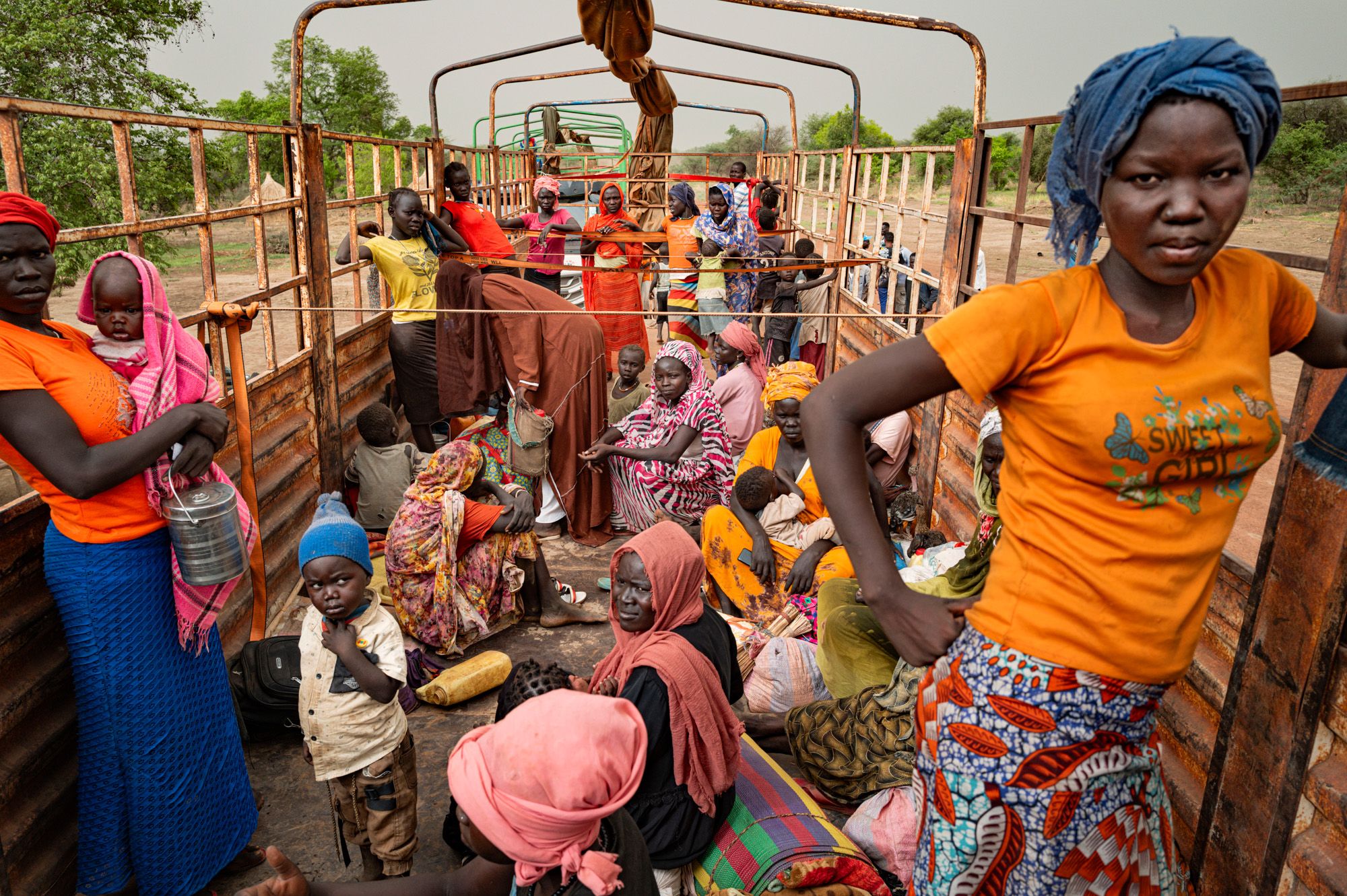
In my reporting for Vanity Fair's special report, 'Does Anyone Care About Sudan?': Inside a War the World Ignores, I spoke with analysts, activists, and many survivors of atrocity crimes. The message was chilling: warning bells were rung repeatedly to save El-Fasher, a city that fell to the Rapid Support Forces in October 2025. Those warnings—which predicted the slaughter—were ignored by Western leaders who had been fully briefed.
The result was a bloodbath in El-Fasher, a haunting record of the lack of political will to protect civilians. We still don't know the total number of dead—as many as 5,000 in three days—but survivors have described the starvation and bombing campaign waged against them before the city fell: the deliberate starving, the killing of women, children, the sick, the elderly, and those too ill to leave hospital beds.
Today, another Sudanese city stands poised to fall to the RSF: El-Obeid, once known as “Bride of the Sands” a city that for two centuries was a crossroads for trade and culture in Karodfan. It is a city that matters to the RSF, strategically vital, linking RSF-controlled areas in western Darfur to territory in the east that they covet.
As evidence mounts that up to 500,000 civilians inside El-Obeid are in grave danger—facing the risk of serious human rights abuses—an urgent debate took place at the UN Human Rights Council. UN Human Rights chief Volker Türk urged world leaders to take immediate action before El-Obeid—the capital of North Kordofan state—becomes another El-Fasher.
'The signs from El-Obeid are clear and unmistakable: another human rights catastrophe is unfolding in Sudan,' Türk warned. Civilians inside the city have already endured siege-like conditions for more than 18 months, along with relentless drone strikes—what Türk called 'appalling suffering.'
'This is not a drill. It is a red alert that needs to land on the desks of heads of state and government around the world,' he said. 'Their phones should be running hot in the coming days.'
That's strong language from a UN that sat back while El-Fasher burned. Britain, Germany, Ireland, the Netherlands, and Norway said they would submit a draft resolution to the 47-member council. It strongly condemns escalating RSF violence in and around El-Obeid and calls for 'an immediate and complete ceasefire by all parties.'
Ceasefires might not be enough to save Sudan. Agnès Callamard, Secretary General of Amnesty International, this week issued a report on El-Fasher, 'A Stain on the Conscience of Humanity,' which cited ethnic cleansing, targeted attacks against children, and sexual violence.
Callamard warned that the RSF will repeat these crimes until they are stopped, and that the people of El-Obeid are in serious danger. 'The Security Council must expand the arm embargo in place on Darfur for nearly two decades to the rest of the country. NOW,' Callamard wrote.
What can be done? Callamard and other NGO leaders urge that states with influence over the RSF—most notably the UAE—'do all in their power to ensure that the RSF does not repeat the atrocities they committed in El-Fasher.' Amnesty also called for an international force to be deployed.
Thirty-one years ago this month, my colleagues and I—reporting the Bosnian war—warned that the city of Srebrenica was in danger of falling to Bosnian Serb forces and that thousands of civilians were at risk.
No one listened. Most of the UN were on vacation. There was zero political will to stop a war in a city no one could pronounce. After several agonizing days, the city fell, and the Dutch UN peacekeeping forces helped separate the women from the men and boys. (The entire government resigned in shame in 2002, following the release of a damning report that examined the failures of the Dutch soldiers.)
Eight thousand men and boys died in those days in July 1995 who did not have to die.
El-Fasher did not have to fall.
We can save El-Obeid—but world leaders need to act now.
Anok Yai’s American Dream
Could Candice Miller Have Known Her Husband’s Secret?
Taylor Swift’s Wedding, According to Prediction Markets
What Ever Happened to Marvel’s Wunderkind X-Men Showrunner?
Blackpink’s Lisa Pulls Back the Curtain on the Life of a K-Pop Showgirl
Katseye Is Ready to Talk
How Garth Fisher Became the Go-To Plastic Surgeon for the West Coast Elite
Why The World Ignores Genocide in Sudan
How Paul R. Williams Put His Stamp on Los Angeles and Beyond
Exclusive: Trouble Behind the Scenes at Alex Cooper’s Media Empire
From the Archive: The Perks and Perils of Being Donald Trump’s Daughter