Miles Teller Experienced Imposter Syndrome Portraying a Dad in 'Paper Tiger' | Vanity Fair
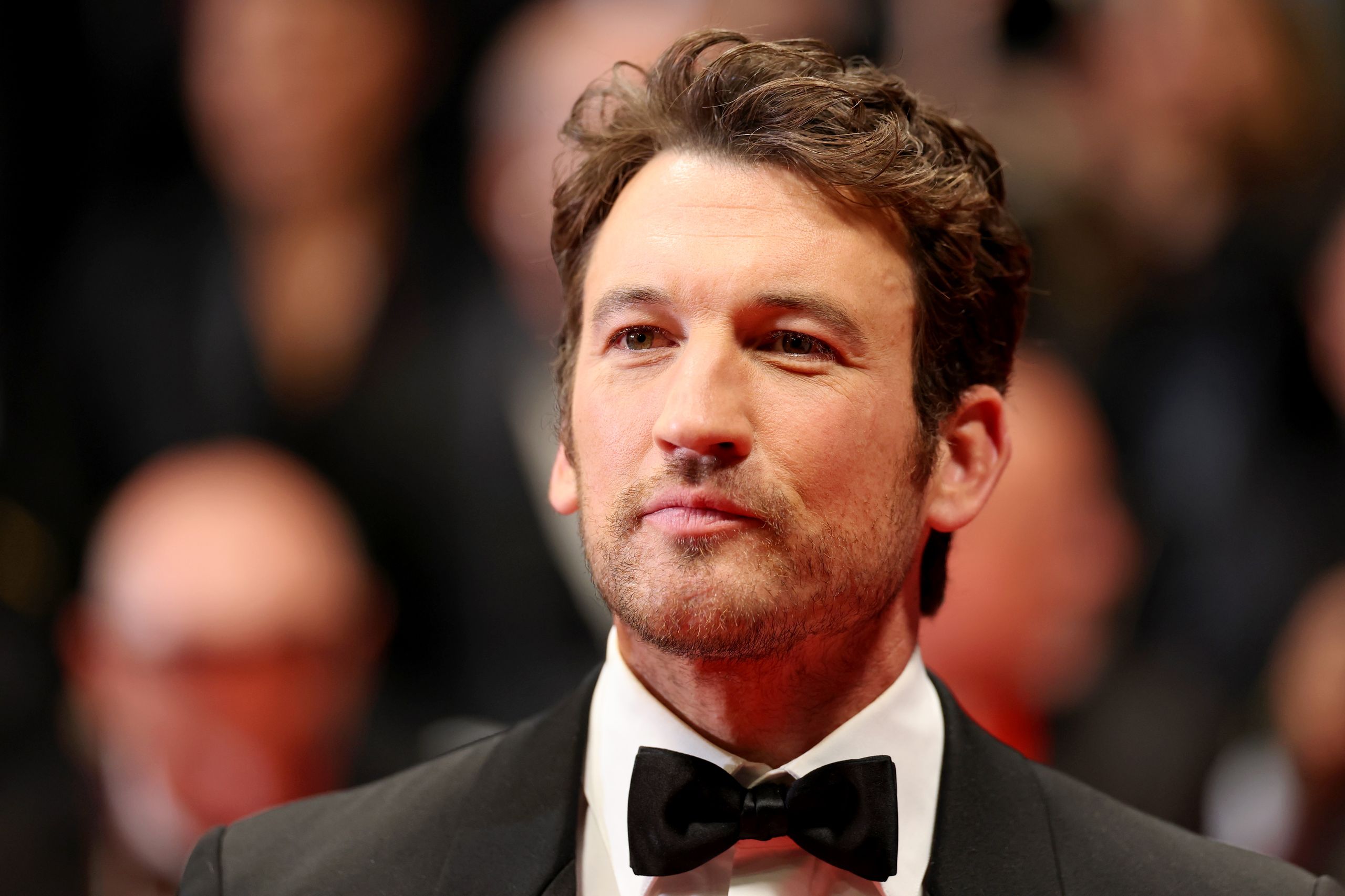
Miles Teller has attended the Cannes Film Festival three times, but there’s one aspect of the prestigious film festival that he still finds a bit uncomfortable: the famous standing ovation.
When a film receives a standing ovation, it can feel like it goes on for an eternity if the film is well-received. The director and actors stand in the spotlight, smiling and absorbing it all. Sometimes, tears are shed (as was the case with Vin Diesel). For Teller, it remains a surreal experience during which he’s not entirely sure how to act.
“You’re grateful and appreciative, of course, but I struggle with how to respond—people are just staring and applauding,” he tells Vanity Fair. “I guess I’m still trying to figure out the right way to handle it.”
During the premiere of James Gray’s Paper Tiger at Cannes, Teller received one of the longest standing ovations of around 10 minutes. The film is a family drama that follows two brothers (Teller and Adam Driver) pursuing the American dream in late ’80s New York. While they strive to start a new business, they get mixed up with some shady characters that endanger their family and livelihood.
For Teller, his role as Irwin, loosely inspired by Gray’s father, is a more mature character compared to his previous roles. He portrays a family man trying to provide a better life for his wife (Scarlett Johansson) and two children.
The day after the premiere, Teller sits down at the Carlton hotel with Vanity Fair to discuss the film. Despite being a Cannes veteran (with previous appearances for Nicolas Winding Refn’s TV series Too Old to Die Young in 2019 and Top Gun: Maverick in 2022), this marks his first time at the festival with a film competing for the Palme d’Or. “The competition might mean more to the director, producers, and executives, as it holds significance. But I’ve never been a fan of rankings or competition,” he shares.
What holds weight for Teller is capturing the character accurately. He opens up to Vanity Fair about playing a father, his own aspirations of fatherhood, how losing his home influenced his performance, and updates on the Michael sequel.
This interview has been edited for brevity.
Teller in Paper Tiger
Vanity Fair: How did James Gray introduce Paper Tiger to you?
Miles Teller: My wife and I were displaced due to the Palisades fires, so we had rented a place in Santa Barbara while we tried to figure out our daily lives. About a month and a half after the fires, I received a call from James Gray about this project. I knew Scarlett Johansson and Adam Driver were attached to it, and initially, it was meant to be a spiritual sequel to Armageddon Time, which I loved. I drove down to LA and met with James, talking about the project and various topics. If you know James, you’ll delve into everything.
Yes, I got a virtual tour of his garden during our conversation.
Exactly. He said, “Miles, I want to work on this with you.” At the time, I wasn't sure when I would return to work. It seemed impossible. I asked, “When does filming begin?” And he said, “In about four weeks.” I would have done anything with James, but filming such a family-centric movie after losing my own home really influenced the work and the genuine love I felt.
Since you knew it was a spiritual sequel to Armageddon Time, based on his parents, did you inquire about his father?
When I visited his house and garden and ate his bolognese, James made it clear that listening to audio recordings of his father wasn't essential or helpful. I was more interested in his father being a first-generation Russian Jewish American and how that background shapes someone. There was more freedom with the character in this film. In Armageddon Time, they were closely replicating some gestures and speech patterns.
Where else did you draw inspiration for your character, knowing that you have family from the East Coast?
I grew up in New Jersey until I was about 12; all my family’s from New Jersey and eastern Pennsylvania. I’ve said this to my wife—she’s from California—I was like, “I feel like everybody needs to just spend some time in the Northeast. Because I think it gives you kind of a thick skin and toughens you up a little bit. It’s very much in my DNA and my family history. But apart from just having a ton of compassion and empathy for Irwin, growing up with really strong and sensitive men in my father and my grandfather, I would say that informed me because I don’t know what it’s like to be a dad, and from people I talk to, you’ll never know what it’s like until you have kids of your own. And so, to be fair, that felt like a bit of imposter syndrome to me.
You haven’t really played a role like this before, as a dad with older kids, and that’s the center of the character’s world.
I mean, a lot of my buddies, they have kids. I think the oldest—they had kids at 21, so actually one of them does have a 16-year-old. That’s a journey my wife and I are very much hoping to go on.
It’s on the schedule.
Yeah.
Does playing a dad like this make you think about what kind of dad you would be?
I think you’re raised with a sort of value system, and I think for the most part you want to give kids a better life than you had. That seems to be pretty universal from parents and grandparents that I’ve talked to.
When it comes to Hollywood right now, I’m having so many conversations about what’s going on in the industry these days.
What’s the data say?
Concern. But lots of different takes on it, and I’m curious where your head is at. Do you feel worried, optimistic?
I think that there’s never been more opportunity for actors and for directors. There’s a lot of really incredible material that tends to be more, like, maybe in the limited-series space or really great television. But I do think that theatrical experience is necessary, and this year is off to a really good start and so people show up. We get into trouble when anybody starts taking their audience for granted. I think that is really the torch that needs to be carried on all levels, not just the people making the thing, but the people distributing, the people selling it.
But I don’t worry too much about the state of things, because at the end of the day, you’ve just got to kind of put one foot in front of the other and try to make the best version of your career, but also the best life for you and your family. That’s what I try to do. Because if I’m focused on work too much, then I tend to not have that time with my wife and my friends, my family.
Speaking of movies that succeeded this year, you played Michael Jackson’s lawyer John Branca in Michael. What have you heard about the sequel?
I know that they’re all very excited about it. I haven’t read the script yet, but once it’s done, then I know we’ll see it.
Did you anticipate the first one being as massive as it has been, earning $706 million worldwide so far?
For a movie to do that kind of business, it really needs to entertain people, because movies—small or big—they do well based on word of mouth. Word of mouth comes from the quality of what you’ve done. I remember reading some study that Michael Jackson was one of the top five most famous people to ever walk the earth, and on that list is, like, Leonardo da Vinci, Jesus Christ—he is that famous.
Live Updates From the 2026 Cannes Film Festival
See All the Fashion From the 2026 Cannes Film Festival
Stars Share Their Favorite Stephen Colbert Stories
Jack Schlossberg Sits Down With Vanity Fair
Why Owning a Sports Team Is the Ultimate Status Symbol
Carlos Alcaraz on “Living the Dream Life” and His Rivalry With Jannik Sinner
A’ja Wilson Is Going for GOAT Status
Kylian Mbappé Is Scoring All the Goals—and Taking All the Heat
Audrey Hepburn’s Remarkably Resilient Life
10 Undeniable Facts About the Michael Jackson Sexual-Abuse Allegations
From the Archive: Stephen Colbert on Trump Trauma, Leadership, and Loss