Why Some in Hollywood Believe Ben Affleck's AI Justifies Its $600 Million Valuation | Vanity Fair
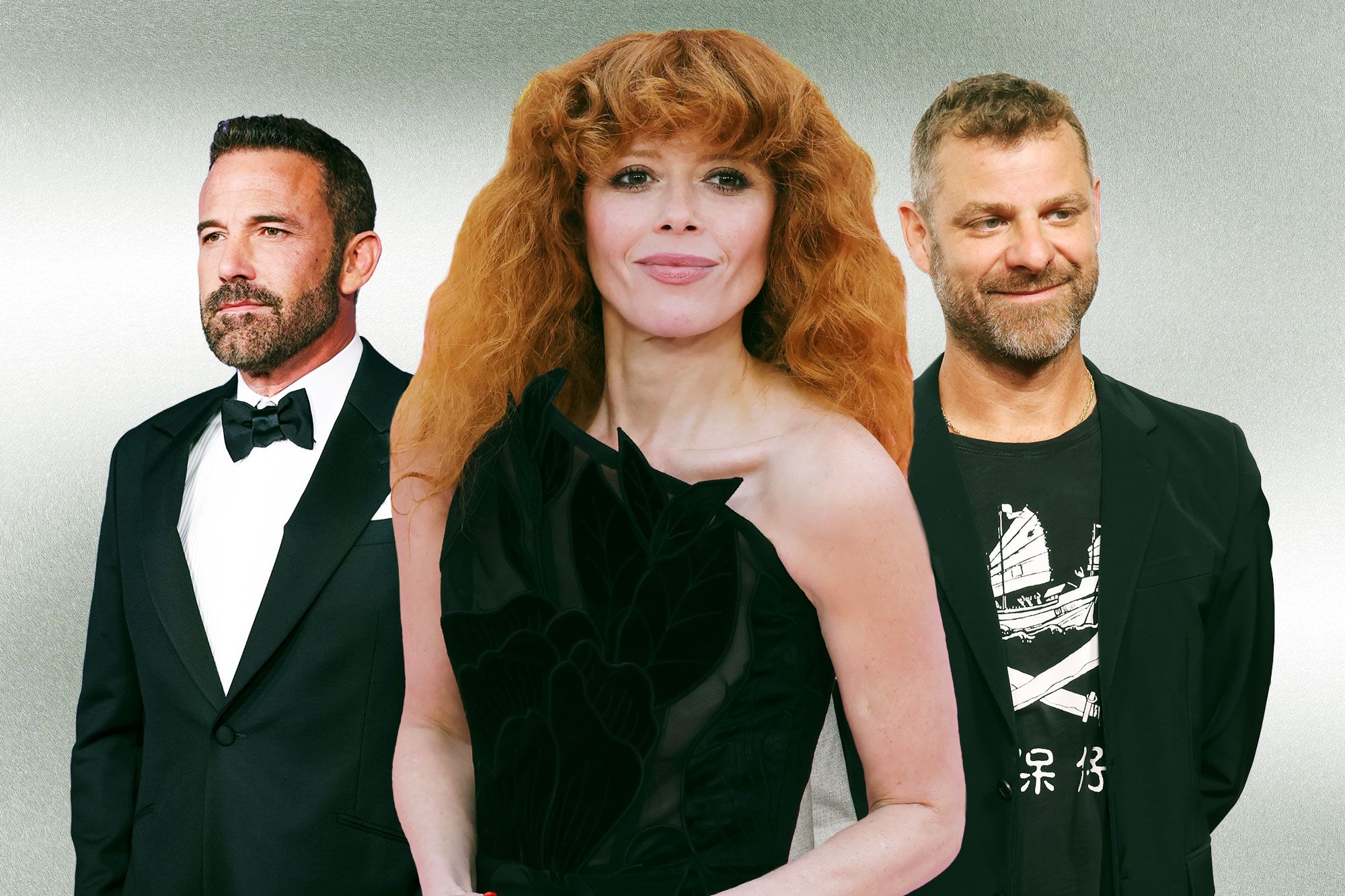
In April 2025, when Natasha Lyonne announced she would make her feature-film directorial debut with Uncanny Valley, a movie that combined traditional filmmaking and AI, the blowback on the internet was swift and fierce. Lyonne, an actor who also writes, directs, and produces, has a reputation as an eccentric and intelligent cinephile—a “cool girl.” Not someone who would side with the machines over the artists. “Suddenly I became some weird Darth Vader character or something,” Lyonne told Variety of the backlash. “It’s not fun when people say not nice things to you. It grows you up a bit.”
What a difference a year makes—especially in the fast-moving world of AI. In just the past few weeks, several major names have been openly talking about the AI projects that they have up until this point been working on quietly. Ben Affleck unveiled his AI company InterPositive after Netflix acquired it in what was reported to be a massive deal. South Park cocreators Trey Parker and Matt Stone recently spoke at length about their work with their AI company, Deep Voodoo. Reese Witherspoon posted on social media that it’s time for women to learn as much as possible about AI. And last week, the first images were released from the set of Doug Liman’s upcoming film starring Casey Affleck and Gal Gadot. The film will use AI to generate the background and lighting instead of using traditional sets.
Sure, there’s still a lot of resistance (just check the comments!) and concerns about AI replacing creatives like actors and writers, but what was once a dirty word to any creative in Hollywood is now crawling its way toward promise and possibility. How did this change come about? The secret to success is that the people who are now exploring AI for Hollywood are from inside the house. “We’ve always known that the innovation is going to come from the filmmakers,” says Bryn Mooser, who launched the artist-led generative-AI film studio Asteria with Lyonne. “It’s not going to come from the tech companies and it’s not going to come from the studios.”
Affleck might be the key to unlocking this conversation. Most of Hollywood was taken by surprise by the news that the actor had an AI company, which had been kept under wraps since it was founded in 2022. His deal with Netflix—a rare acquisition for the streamer—is an easier sell because it’s uniting two entities from within the industry instead of bringing in an “outsider” Silicon Valley company.
Affleck says InterPositive’s tech isn’t going to replace creatives—it’s focused on making the production process faster and more affordable. (The patent application filed for InterPositive’s tech predicted “substantial” savings on below-the-line production costs, including cutting down visual effects costs by 50%.) “I want to take out all the logistical, difficult, technical stuff that often gets in the way,” Affleck said in a video Netflix released alongside the announcement of its acquisition. “It’s not about text prompting or generating something from nothing. You’re building a model from your own material.”
InterPositive’s tech, as impressive as it may be, isn’t even the most valuable asset here: It’s Affleck himself. He’s not only an Oscar-winning director and producer but he’s a well-respected A-list movie star who can speak in front of doubters with charisma. “They have Ben Affleck, and that’s very powerful,” says one insider who works in the AI space, “because that helps get filmmakers to feel more comfortable—and that’s worth the $600 million.”
This whole AI infiltration into Hollywood got off on the wrong foot from the start, says Stone. When Silicon Valley types are pitching their AI companies and the ways they could change content creation to investors, they’re sometimes full of tales of the complete obliteration of actors, writers, and filmmakers. But that’s the nature of raising money in Silicon Valley: make big promises, even if they’re not reality. “Those guys came down and scared the shit out of everybody, and they always do that,” Stone tells Vanity Fair. “They don’t make movies and they don’t know how to do it—they’re doing a pitch deck.”
Stone and Parker quietly founded their AI visual effects studio Deep Voodoo back in 2020. At first it was just for their own use, to create deepfake videos (sometimes involving a certain sitting US president). They didn’t talk much about it publicly, but you’ve likely seen their work, which includes the Dunkin’ Donuts Super Bowl commercial featuring Affleck and all your favorite ’90s sitcom stars and Kendrick Lamar’s music video for “The Heart Part 5,” in which his face morphs into Kanye West, Will Smith, Kobe Bryant, and others. Their work is focused on de-aging and face swapping, while still capturing real performances from actors. “We kept this technology to ourselves at first because we’re like, ‘This is amazing. We got this really cool thing,’” says Stone. “And then there was a day when we went, ‘We have to open this up and we have to go start talking to people because this is way bigger than the shithead comedy like we do.’”
The messaging from all of these storytellers is the same, and is helping to put Hollywood at ease (at least a little bit): AI is a tool that can help make things easier and more affordable—it’s additive, it’s not about replacing creatives. “If you look at what’s being done by folks like Matt and Trey, by Ben and others, it’s moving toward the side of utility,” says Kenneth Ye, a strategic development executive at CAA. “And it really took a while to actually figure out how to do that right.”
Tye Sheridan hasn’t kept his interest in AI under wraps at all. He was one of the first in Hollywood to explore the possibilities when he and Nikola Todorovic cofounded AI tech company Wonder Dynamics way back in 2016. At the time, Sheridan, known for his work in sci-fi films like Ready Player One and the X-Men franchise, was telling agents, managers, and anyone else in Hollywood who’d listen that they should educate themselves about AI. “It’s coming. It’s going to be a big part of our industry,” he remembers saying. “And some people would kind of laugh because they thought it sounded so science fiction.”
It was after ChatGPT launched in 2022 that Hollywood (and the rest of society) realized the possibilities. By 2023, Sheridan and Todorovic launched Wonder Studio, an AI tool for animating, lighting, and composing CG characters in a live-action scene. They’ve been intentional about using AI in an additive way, not to replace creative talent like actors. “We spend a lot of time working on staying on the good side of AI,” says Todorovic. “I’m not going to lie, it wasn’t easy to stay on that side because you’re always tempted.”
For Sheridan, it’s the nuance of AI that has been lost in the conversation up until this point. But as more filmmakers openly talk about the specific ways they’re using AI, it’s making a difference. “There’s so many different models, so many different AI solutions—it’s like saying the internet is bad or the internet is good,” he says. “You have all these different tools within the AI ecosystem, some of which are inherently more detrimental to artists and some of which actually really help them out in a lot of ways.”
Like Affleck, Sheridan could be key in turning the tides in this space because he’s also an actor. At this point, some of the greatest resistance to this technology is coming from this group. According to several sources, many actors are still refusing to sign on to AI projects even if they are interested because of the fear of the blowback they would receive from the acting community.
But if the marketing stunt that was Tilly Norwood showed us anything, AI is not at a point where it can replace actors from scratch. But with SAG-AFTRA’s current contract scheduled to expire on June 30, the union will resume talks with the studios this month to negotiate its new contract, and establishing some AI protections is expected to be one of the main points. Darren Aronofsky’s AI company Primordial Soup hired all SAG-AFTRA voice actors for its most recent project, the animated series On This Day…1776. “For us, yes, there’s the ethics of working with SAG actors. There’s also the practicality that you can get a way better performance,” says Dylan Golden, Aronofsky’s longtime producing partner and a founding partner at Primordial Soup. “I’m not sure why at this stage we would want to use AI if we can get a much better performance out of an actor.”
There’s still a long way to go in both conversations and quality of content: On This Day…1776, which recreates moments from America’s founding year, may have been a step up from AI “slop,” but it was met with mostly unfavorable reviews. The filmmakers trying to take steps forward by exploring AI (and there are more of them still doing it in the shadows) are making it more acceptable for others, but whether audiences will tolerate it is still an open question. “Frankly, filmmakers are often and probably should be slightly ahead of where audiences are at—and I don’t know that audiences are there yet,” says Golden. “I think filmmakers are going to help show audiences what’s possible and what’s acceptable and what’s not acceptable.”
Conspiracy Theorists Are Linking 11 Disappearing Scientists to the White House
The Curious Case of the Missing Cocaine…Cover
Exclusive: Queen Elizabeth’s Never-Before-Seen Portrait, Unveiled
See All the Looks From the Devil Wears Prada 2 World Premiere
The Wretched Rise of Toxic Fandoms
10 Undeniable Facts About the Michael Jackson Sexual-Abuse Allegations
Don’t Call Nara Smith a “Tradwife”
Everything You Need to Know About the Met Gala 2026
Meet the Man Who Will Get Inside Trump’s Mind
From the Archive: What Really Happened the Night of Joey Comunale’s Murder