Exclusive Preview: Adam Driver, Miles Teller, and Scarlett Johansson Star in 'Paper Tiger,' One of Only Two U.S. Films Competing at Cannes | Vanity Fair
If you ever happen to find yourself on a Zoom call with James Gray, be prepared to get a virtual tour of his herb and vegetable garden, his fruit trees (lemon and fig), and his guest house, where he’s set up a projector for movie-watching complete with a vintage popcorn maker. The writer-director is generous with his time and loquacious with his words, and admits that sometimes his openness in interviews has gotten him in a little bit of trouble.
For example, a few years back he said in an interview that he wanted to make “the most realistic depiction of space travel that’s been put in a movie.” But along the way to making Ad Astra (starring Brad Pitt), his goals changed and the film morphed into something else, more of a space fable, if you will. When audiences finally saw it in 2019, some were up in arms that it wasn’t what he had originally promised.
The same thing could happen now. After his 2022 movie Armageddon Time came out, Gray started talking about how he wanted to do a sequel to the family drama that was based on his own childhood. It would star the same actors as his father (Jeremy Strong) and mother (Anne Hathaway) and focus on when his mother discovered she was sick.
Miles Teller in Paper Tiger.
But, again, as it goes with moviemaking, Gray’s plans changed. As he began to write the script, he decided he’d already done the deeply autobiographical film with Armageddon Time, which was set in the early 1980s in Queens, and follows a young boy grappling prejudice. That movie was so personal—he even filmed at his elementary school and other locations from his childhood—that Gray previously told me: “If someone says, ‘I hated that movie,’ it means they hate part of me.”
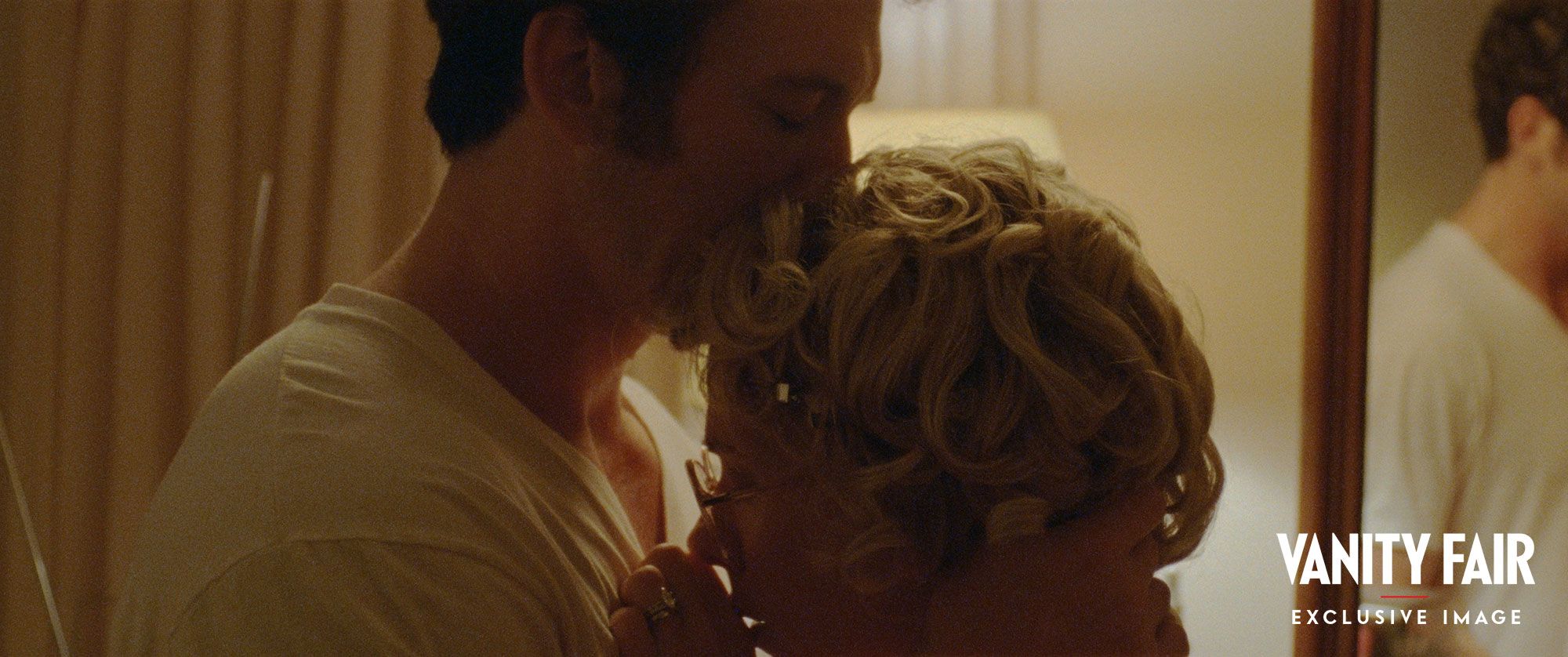
For his next movie, he decided to once again take inspiration from events in his own life, but this time he created an original story. “It was like something coalesced in me to try and reveal this family later in a different mode, maybe slightly more operatic, slightly more rooted in melodrama, Hitchcockian, suspense, drama—a little more heightened,” Gray tells Vanity Fair in an exclusive interview ahead of the release of Paper Tiger, which will have its world premiere at the Cannes Film Festival on May 16.
When Strong and Hathaway had to leave the follow-up because of scheduling conflicts with other films, Gray cast Scarlett Johansson and Miles Teller in their stead. “They fit a slightly more operatic idea of the movie and were able to allow me to think about it, not as a continuation of Armageddon Time, but as a whole new movie,” he says. “And that was actually very liberating.”
Paper Tiger is a tense family drama set in the late ’80s in New York, following two brothers who are chasing the American dream. But when they find themselves in a dangerous world of corruption and violence after becoming involved with some threatening Russian characters, their bond begins to fall apart. It may not have been the movie Gray had in mind, but it was the movie he was destined to make. He says, “One of the things I’ve learned is that there are movie gods, and you can’t always dictate what they’re telling you and you can’t always control the subject.”
Paper Tiger is James Gray's sixth film to play at the Cannes Film Festival.
Even if it’s not exactly autobiographical anymore, Gray’s personal history is woven into the fabric of this film. The family lives in New York, where Gray grew up. And the movie still explores elements of Gray’s childhood, like his mother’s health issues and his father’s legal troubles. “That family unit that was so tight in a matter of weeks was blown to smithereens,” says Gray. “I really think when I look back on it now, both this and Armageddon Time, and really the other films I’ve made that are among the more autobiographical, are me trying to grapple with that sense of loss.”
Like Gray’s 1994 feature debut Little Odessa and his 2007 crime drama We Own the Night, Paper Tiger also centers on the bond of brothers. “I’m very close to my brother now. We speak almost every day, but he used to beat the shit out of me when I was a kid,” says Gray. “So there was that complexity. These blood connections, they mean a lot to me.”
Teller and Adam Driver play brothers who are close, but live very different lives. Teller’s Irwin is a family man who makes ends meet, while Driver’s Gary is a bachelor who wears fine suits and has money. Both deliver tense, dramatic performances, but Teller, known for Top Gun: Maverick and his more comedic work, gets to show off a different side of himself. “When I met him, he had a tough-guy exterior, but he couldn’t hide the softness, the vulnerability,” says Gray.
Teller and Johansson at first asked Gray about his own parents, hoping to mine details for their characters (Hathaway and Strong had done the same for Armageddon Time). But this time Gray told them to knock it off. “I said, ‘Guys, I do not want you imitating my parents. This is becoming its own thing,’” he says.
The film shot for 31 days last summer, and Gray says it was the most physically challenging shoot of his career. “And I did a movie [The Lost City of Z] in the Amazon jungle,” quips Gray. “But this was 98 degrees, 90% humidity, on asphalt, every fucking day.”
Though the shoot was short and the heat was hot, Gray says being surrounded by talented, dedicated actors made the rest of it pretty easy. He also adds that Johansson (a native New Yorker), Teller (who spent part of his childhood in New Jersey), and Driver (who has lived in New York for a long time), all deeply understood the type of family they were trying to capture. He also hired many New York actors to play the supporting and background roles. “They have a thing. I think it’s probably because they’re more attracted to stage first. They have such a depth of craft to do the anti-influencer movie,” he says.
Adam Driver in Paper Tiger.
Paper Tiger, which Neon will distribute theatrically in the fall, will be Gray’s sixth film to compete at the Cannes Film Festival. You would think he’d feel at home at the festival by this point, but that’s not the case. “In total candor, Cannes is not easy for filmmakers,” he says. “You go there and you dress in this tuxedo and I’m not comfortable being in front of the camera. You don’t know what the reaction’s going to be when the credits come, so you’re nervous the whole time.”
He adds that it’s “not a place generally that’s hospitable to American cinema,” pointing out that American filmmakers in the past couple decades have only won the Palme d’Or when the president of the jury was also an American. (Sean Baker won in 2024 when Greta Gerwig was president; Terrence Malick won in 2011 when Robert De Niro was president; Michael Moore won in 2004 when Quentin Tarantino was president). This year, Gray and Ira Sachs (for The Man I Love) are the only American directors with films in the competition.
But that’s also exactly the reason Gray keeps coming back. “It’s the citadel of European art cinema. And so we are the Visigoths going in there,” he says. “But I think it’s important for Americans to stay in the hunt there because we have to say, ‘We are on your level. We can play here too.’”
The 15 Films We Can’t Wait to See at the Cannes Film Festival
All the Other Can’t-Miss Details for the Cannes Film Festival 2026
Don Lemon Sure Sounds Like He Wants to Run for President
Billionaire Clara Wu Tsai Talks the WNBA’s Next Chapter
Forget Palm Beach. Wellington Has Plenty of Wealth—and All The Horses
Prada Heir Lorenzo Bertelli Hops Back Into His Racecar Seat to Give VF a Spin
Roger Goodell’s Hollywood Blitz: Why All the Other Moguls Have to Kiss the Ring
Inside the Enhanced Games—Where Athletes Biohack Their Way to Glory
Trinidad Chambliss on Why He’s Doing Battle With the NCAA
From the Archive: Moms Gone Wild: A Look at the Women Behind Paris, Lindsay, and Britney