Silicon Valley Fashion Embraces Military Style: Gouging Tools and Lapel Daggers | Vanity Fair
I wasn’t really at Brimble & Clark to see the suits.
It was a sunny day in April, the afternoon before the White House Correspondents’ Dinner weekend, when I trekked to Sim Khan’s suit atelier in Mount Vernon Triangle, Washington, DC. I ran my fingers across a rack of fur coats, glanced at a wall of framed magazine covers with ripped men donning Khan’s jackets, before sitting down in his office.
Read A Billion to One: From the mad scientists to the megadonors, a dispatch on the money, power, and influence of technology.
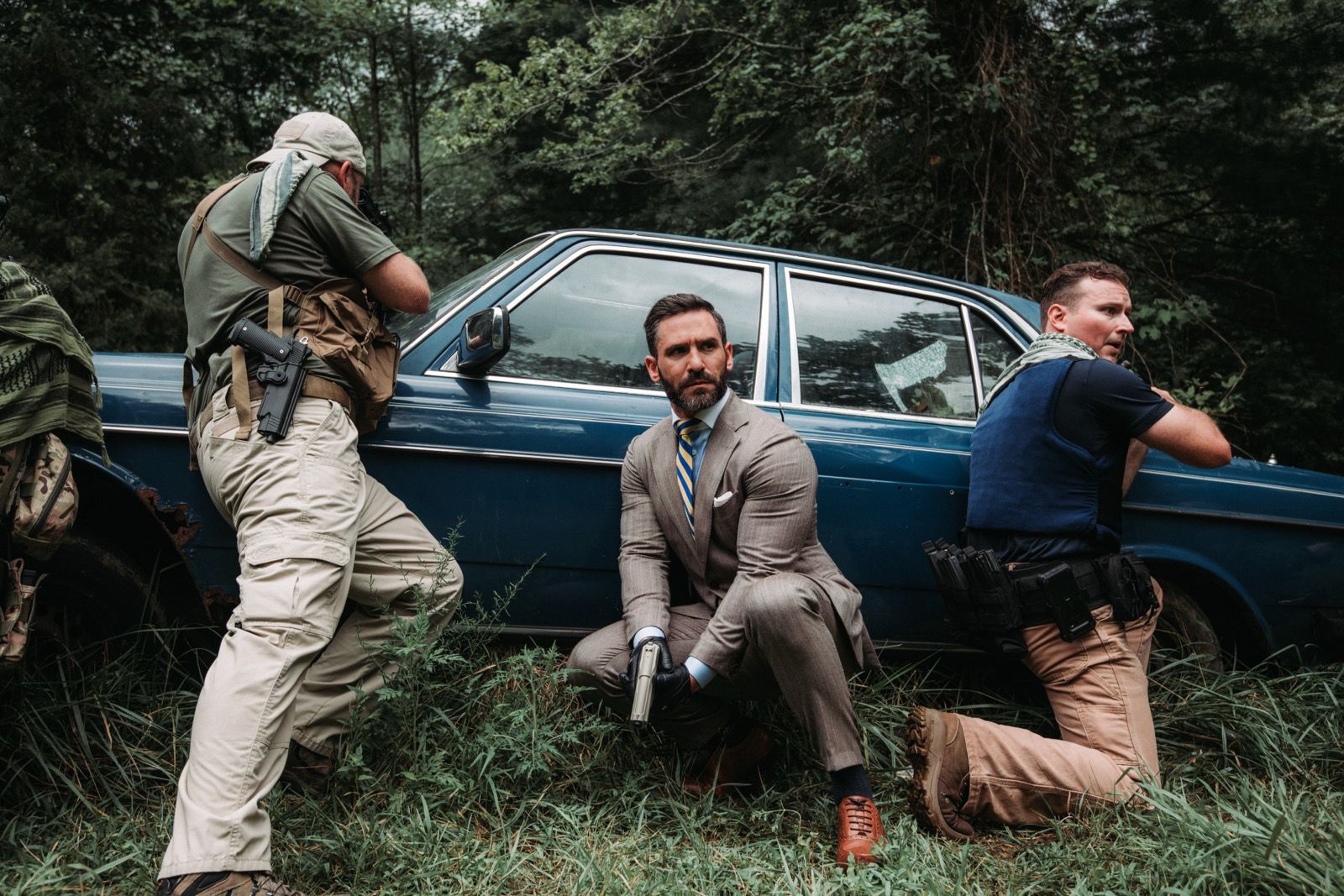
Khan, a slim, bald man dressed in a crisp suit of his own, sat across from me and grinned before clicking a button. A large black-and-white photo beside me suddenly slid upward and disappeared into the wall. In its place there was a spread of weapons splayed on green cloth: two large guns, three daggers, a metal knuckle ring. They were arrayed beside a pinstripe jacket, which Khan had tailored so it could conceal all of these lethal gadgets.
Khan has long advertised his store as a favorite among defense contractors and special forces—i.e. men who might actually have to fight in a suit. He’s dressed everyone from former acting secretary of defense Chris Miller to Scott Howell, the former commanders of the Joint Special Operations Command, and Diplo (because a suit fit for fighting is also well suited for dancing).
But that’s not how I found him. I discovered Khan through another group with a penchant for suits and guns: tech executives. “They like the idea of the real-life John Wick,” Khan said.
Tech founders may not be shipping out or taking fire, but they can wear the same suits as the guys who are. It’s a costume designed to appeal to their customers, just as how the T-shirt-and-jeans uniform was born in the era of consumer-facing apps. Tech will always morph to whom it’s selling to.
General Scott Howell
In the last few years, Khan’s tech customer base has skyrocketed. He says he’s dressed over 40 founders and 140 executives at public companies in the past year alone. His clientele includes leadership from Zoom, Oracle, and Disney, and, increasingly, AI start-ups looking to sell to the government. Most of these founders would rather stick to T-shirts and jeans. But their fashion rebellion wanes when they score a meeting at the Pentagon—and if they have to wear a suit, they may as well wear one fit for a super soldier. Three tech execs I spoke to compared Khan’s business to the movie Kingsman.
Welcome to the militarization of Silicon Valley style. In the past year, it seems that founders have traded their Patagonia vests for suits with bulletproof lining, and have begun printing their companies’ names on challenge coins, medallions that are typically engraved with military insignias and given by and to service members as tokens of appreciation. Defense tech companies, which gobbled up $49.1 billion in venture funding last year, are launching hyped-up streetwear collections. (Palantir’s blue chore coat, inspired by the traditional garment of the French laboring class, sold out immediately, as did Anduril’s swag.) Some tech CTOs have literally joined the Army, decked out in head-to-toe camouflage on their initiation day.
Heath Dorn, who runs AI defense start-up Fulcrum Defense, heard of Khan from a senior NASA official. Dorn is now working with Brimble & Clark to design a line of sports jackets for his employees. “We all wear tennis shoes and sneakers,” he said. But “walking the halls of Congress and the Senate and the Pentagon, we need to be a little bit more sophisticated.”
The goal of the effort, as drone start-up founder and Khan customer Blake Resnick put it, is to “signal cultural compatibility” with tech’s new favorite customer: the Pentagon, whose budget has now ballooned to $1 trillion.
Fulcrum Defense CEO Heath Dorn (right) getting fitted by Sim Khan.
Growing up as an Indian man in Montreal, Khan quickly learned that clothes were not a form of self-expression but a tool. “I understood that if I wore a puffy coat that I could get followed around in a store,” he said. “But if I wore the right tailored jacket—even if it was with jeans—and the right shoes, I could walk to the front of a line at a club.”
Khan initially pursued a legal career in Ohio, working as a lawyer for four years before packing up to DC in 2011 to open Brimble & Clark.
When he arrived, Khan went to fancy event after event trying to solicit customers. But it was his side gig as the host of an obscure late-night show covering current events that turbocharged his career: one interviewee was former Washington Commanders player Pierre Garçon, who complimented Khan’s suit and became Khan’s first professional-athlete client.
Khan now dresses 74 professional athletes, mostly from the NFL. As Khan’s star rose, members of the Special Forces saw his social media posts, which often featured buff men in the gym lifting weights in formal attire. Soldiers came to him, explaining that they were “athletes in their own right” with similar suiting requirements—give or take a few daggers.
A Brimble & Clark advertisement.
“They said, ‘We have other needs. Can we hide things in these clothes?’” Khan recalled. “So we started developing defensive, offensive tools and concealment devices to integrate into the clothes.” Once he got the athletes and the soldiers, along came the tech bros. As more founders sold to the military, they hired veterans to help navigate the Pentagon bureaucracy. Khan said that, without fail, the founders always ask for the daggers and magnesium buttons (you can shave them to start a fire). He’ll only offer those tools to men with military IDs—or if a founder knows someone with a military ID who can vouch for them.
But Khan does offer any founder a sharp-edged, three-inch-long metal bar made of a special titanium that he alleges doesn’t set off metal detectors. He slides it into his customers’ collars. “They make a mean gouging tool,” he said.
“And founders have asked for that?” I asked.
“All of them ask for that,” he replied. (“It’s definitely interesting at events,” Andrew Coté, senior vice president at AI defense company Forterra, said.) One founder is considering outfitting his staff in the suits and throwing handcuffs in each jacket. “Just to kind of make it a little special,” they said.
I asked Khan if any founders were getting their suits fitted for concealed carry. He said no—but the Fortune 500 CEOs were, especially after Luigi Mangione allegedly killed the UnitedHealthcare CEO. (Mangione has pleaded not guilty to all charges.)
“The older guys, they carry,” Khan said.
Khan’s suits aren’t for everybody. For example, they are not for Derek Guy, the viral menswear writer. “This is like…I’m sorry. It’s just like low taste,” Guy said on a call while scrolling through Khan’s website. “It’s just a slim suit. It’s like Andrew Tate, right?”
Khan’s suits do emanate a certain machismo, with tightly fit pants and a jacket tailored to emphasize one’s biceps. His website features a video of a suit-clad man with a steel-cut jaw sprinting through the woods with a gun. “That’s a very specific definition of masculinity,” Guy said. “So I would think that if Silicon Valley people are buying that, then do they find that presentation of masculinity appealing?”
Coté said the distinctiveness is part of the point. “They’re unlike any other suit I’ve ever worn,” he said.
“As you’re in and around DC, once you own one or multiple suits, it’s very easy for you to recognize the tailoring,” he said. “It becomes a part of this community when you’re one of his clients.”
As more tech execs enter Khan’s teal atelier, more leave dressed in this strain of rippling-muscle masculinity. It may not appeal to traditional menswear devotees, but it certainly captures a Washington that treats manhood, wealth, and patriotism as ideology. Benjamin Wild, a cultural historian at the Manchester Fashion Institute, noted in a Wired article tech’s “macho makeover,” that “within America today, these men seem less concerned about their perception among the public and far more concerned about how they appear to one another, and Trump.”
I get the sense from founders that this aesthetic proximity to the military feels deserved, given Silicon Valley’s dedication to reindustrializing America. Chris Power, the founder of AI defense manufacturer Hadrian, recently opened up an automated shipyard in Alabama. At the opening he joked, “I think we earned the right to wear a Carhartt.”
After I had coffee with Khan, I went to YouTube’s Correspondents’ Dinner party, where influencers mingled with politicians and founders. I wondered how many people there had a gouging tool hidden in their collar. Then I wondered how many would only ever use it as a bottle opener.
What Reading Martha Moxley’s Haunting Diary Reveals Now
How a Male Supermodel Escaped a Manhattan Socialite’s Cult
Noah Wyle Defends Dr. Robby’s Fall From Grace
I Was the Face of New York Magazine’s Controversial, Andrew Cunanan–Inspired “Trophy Boys” Cover Story
A Guide to All the New Openings in the Hamptons This Summer
How Flesh-Eating Bacteria Is Invading the East Coast’s Swankiest Waterways
The 25 Best Movies to Watch on Netflix This June
The Wild, Strange Case Todd Blanche Can’t Seem to Escape
10 Undeniable Facts About the Michael Jackson Sexual-Abuse Allegations
From the Archive: The Man Who Kept Marilyn’s Secrets
Here is the rewritten article with html tags included:
Benefits of Regular Exercise
Regular exercise is crucial for maintaining good physical and mental health. It has numerous benefits that can improve various aspects of our lives. Here are some key benefits of incorporating exercise into your daily routine:
- Improved Cardiovascular Health: Exercising regularly can strengthen your heart and improve blood circulation, reducing the risk of heart disease and stroke.
- Weight Management: Physical activity helps burn calories and maintain a healthy weight, preventing obesity and related health issues.
- Enhanced Mental Well-being: Exercise releases endorphins, which are known as the "feel-good" hormones, helping to reduce stress, anxiety, and depression.
- Increased Strength and Flexibility: Regular workouts help build muscle strength and improve flexibility, enhancing overall physical performance.
- Better Sleep Quality: Physical activity can promote better sleep patterns and help alleviate insomnia, leading to improved rest and recovery.
It is recommended to engage in at least 150 minutes of moderate-intensity exercise per week to reap these benefits. Whether it's going for a run, lifting weights, or practicing yoga, finding an exercise routine that suits your preferences and lifestyle is essential for maintaining a healthy and balanced life.