"Intriguing Obsessions: How Women Fuel the Fascination with Female Killers | Vanity Fair"
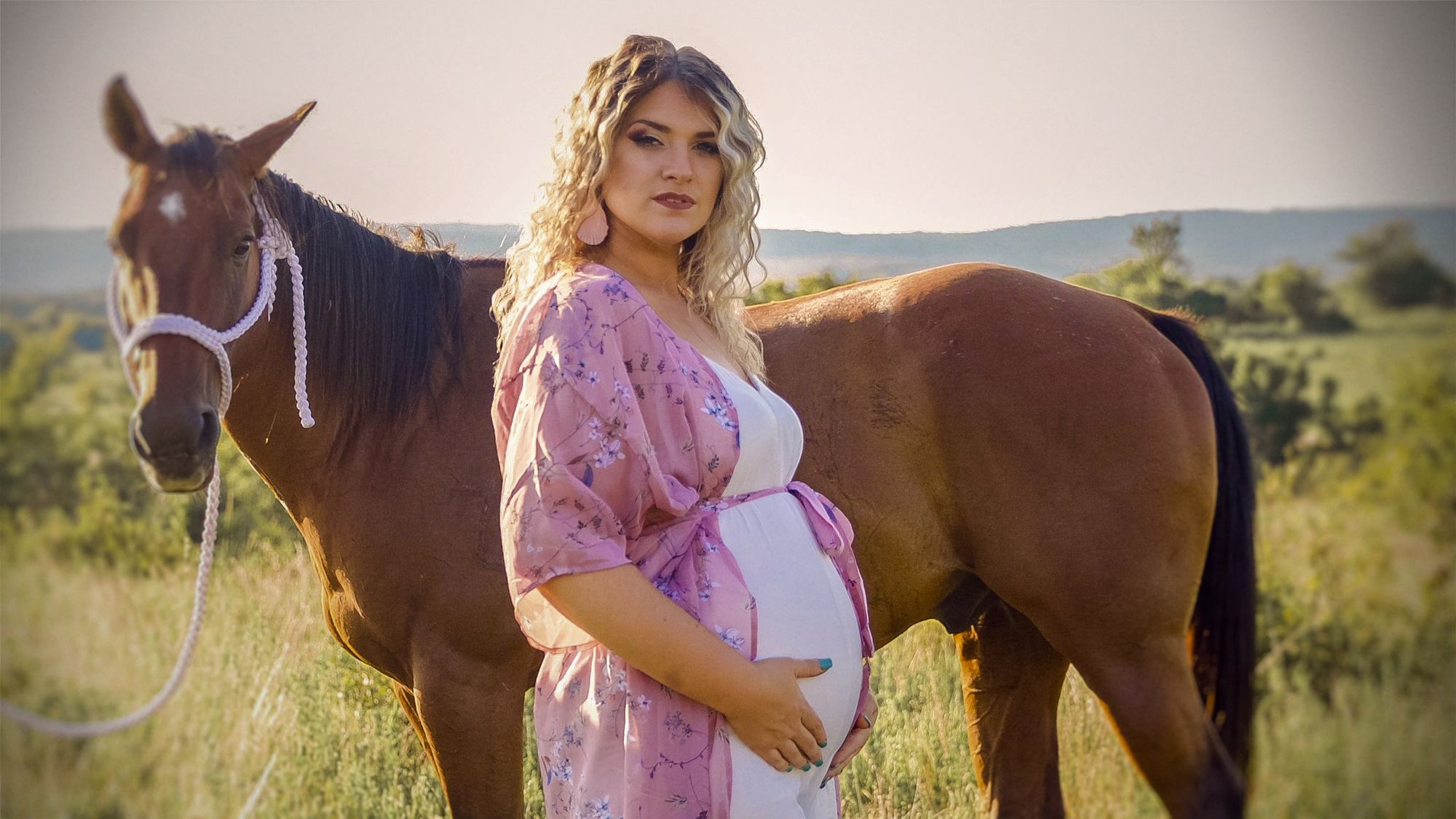
“A pretty blonde girl in Texas with a Southern drawl and no violent history isn’t what you think danger looks like in our society,” says Maternal Instinct filmmaker Jessica Dimmock. The new Netflix documentary, released last week, tells the gruesome tale of Taylor Parker, who in 2020 faked a pregnancy, then murdered Reagan Simmons-Hancock to steal her unborn baby. Currently the number one movie in the US on the streamer, Maternal Instinct is the second female-centered true crime doc to send waves throughout social media in recent weeks. Seventeen years old at the time of the incident, Mackenzie Shirilla is the unlikely perpetrator of The Crash, which details the nearly 100-mile-per-hour car collision that killed Dominic Russo and Davion Flanagan in 2022. Since its May 15 premiere, the film remained in Netflix’s Top 10 movies in the US until June 8, generating more than 28,000 related TikTok videos, and near-daily headlines. Both Parker and Shirilla are the latest female assailants to get the Netflix true crime treatment, following February’s The Investigation of Lucy Letby, centered on the British neonatal nurse convicted of murdering seven infants, and before this fall’s first female-led season of Ryan Murphy’s Monster, which follows Lizzie Borden, who was acquitted in the still unsolved axe murders of her parents back in 1893.
If a “Dirty John” is a man with criminal tendencies, then consider the genre’s “Dirty Janes”: the likes of Gypsy-Rose Blanchard and Michelle Carter, both of whom have been released since serving time in their respective high-profile cases—Blanchard for second-degree murder and Carter for involuntary manslaughter. Last year, both Karen Read, acquitted of killing her Boston cop boyfriend in June, and Sherri Papini, who served time for masterminding her own 2016 kidnapping in California, participated in documentaries about their cases. True crime content like this has become a 24/7 “multibillion-dollar industry,” primarily because of women, who account for nearly 75% of true crime podcast listeners, according to Time. A YouGov poll similarly shows that 61% of women watch true crime compared to their male counterparts at 52%. “They may also relate to the subjects of most true crime entertainment, in which the victims are overwhelmingly female,” Time magazine reported in 2020, “even though, in the US at least, far more men than women are murdered each year.”
If women are psychologically drawn to true crime, seeing the stories of female victims as a survival guide, what do they get from cases in which women are the killers? “The female perpetrator is much, much rarer. Violence, aggression very traditionally has been considered a masculine characteristic,” says The Crash director Gareth Johnson. “It’s quite possible that there’s an extra layer of interest because of that.” Although he had no idea just how much the internet would fixate on Shirilla’s story. “We had a sense it would start debate,” says Johnson, “but I underestimated the intensity of it. It’s been quite wild on social media.”
In the month since Shirilla’s Netflix debut, viewers have dissected everything about the now 21-year-old, who is currently serving two concurrent sentences of 15 years to life in prison—her first parole hearing is scheduled for September 2037. During her August 2023 trial, prosecutors argued that an investigation into what first appeared to be a tragic car accident revealed Shirilla’s calculated attempt to kill Russo amid their volatile romance. Shirilla’s social media presence was submitted into court as evidence of her guilt. “People document everything about their lives now, every emotional up and down. And it just changes everything about a criminal investigation,” Johnson says. “If this exact same event happened 10, 15 years ago, it’d be a very, very different story.”
Social media users—particularly on female-dominated platforms like TikTok (76% of women use the platform compared to 60% of men, according to market-research firm Opeepl) and Instagram (83% of women compared to 69% of men)—have dug into everything from Shirilla’s prison disciplinary records to jail phone calls with her mother. During one, Shirilla can be heard complaining of boredom, telling her mom “there is nothing for me to do” in a call from behind bars published by TMZ. Is this version of Shirilla similar to the one who the Crash filmmakers met during their documentary’s interview? “In her interview with us, she obviously had talking points and things she wanted to get across, and that’s completely understandable. She is fighting the conviction,” says Johnson. “Both the social media videos and the jail phone calls capture perhaps a less guarded Mackenzie,” he says carefully. “There was never any sort of psychiatric report done on Mackenzie. So all we’re left with is this social media trail that she left.”
In the documentary, Shirilla maintains she has no memory of the moments before the crash and points to her POTS (postural orthostatic tachycardia syndrome) diagnosis, a condition she says causes her to “black out”—the same defense her legal team presented at trial. As for her TikTok videos being used in court, “I feel like anybody’s social media isn’t really them,” Shirilla says during her first public interview in the doc. “It’s how they want the world to see them. And at the time that’s how my 17-year-old brain was wanting to be seen.”
Now, scores of other social media users, many of them women, are scouring Shirilla’s digital footprint for clues about the woman who was behind the wheel. “Part of the attraction of true crime as a whole is trying to figure out who somebody really is,” Johnson tells VF. But a person’s social media presence only tells part of the story. “You are one person to your friends, one person to your parents, one person on social media,” adds producer Angharad Scott. “I don’t think there is any one true version of yourself.”
Figuring out what drives a woman to kill is the genesis of the long-running Oxygen true crime TV series Snapped, which has been chronicling real-life cases of accused female murderers since 2004. It was first conceived when Jupiter Entertainment executives learned that only about 8% of murders are committed by women. They weren’t the only ones who wanted to know what made the women allegedly snap—the series has earned famous female fans including Viola Davis, Cardi B, and Lady Gaga, who in 2015 told Jimmy Fallon that the show fascinates her because the women’s belief in their “need to kill to survive” causes them to “make the most ridiculous mistakes,” which the pop star admitted to finding “humorous.”
Women wander toward, as Gaga called it, “the art of darkness,” for all sorts of reasons, but Maternal Instinct director Jessica Dimmock ventures that the novelty of crimes committed by women only adds to the curiosity about the circumstances that surround them. “Male violence against women is so utterly common. To see the tools that women use is interesting because they don’t have some of the brute force,” she says, “although what Taylor ended up doing was as violent as any man.”
On October 9, 2020—17 days past her fake due date—Parker, then 27, drove to the home of Simmons-Hancock, 21, whom she had met and befriended while photographing her wedding that previous fall. Parker was later stopped by a state trooper who found her covered in blood. She claimed to have had her baby roadside, but doctors who examined Parker found no evidence of childbirth—or recent pregnancy. During police questioning, Parker admitted she had been in a “physical altercation” with Simmons-Hancock and had taken the baby from her friend’s body. “Everyone that we interviewed said, ‘I never in a million years thought she would’ve done something like this,’” Dimmock tells VF, “‘and, the second I heard the crime that had happened, I knew that it was her.’”
Before the murder, Parker documented her deceit on social media. In what prosecutors believe was a ploy to keep her boyfriend Wade Griffin, Parker pretended to be pregnant with their child. He did not know what doctors at Northeast Texas Women’s Health center did—that Parker could no longer carry children after a hysterectomy following the birth of her second child, years before she met Griffin. The documentary shows how HIPAA laws prevented physicians from intervening in what they knew was a fake pregnancy, but upon seeing Parker’s social media activity—including a full-blown gender reveal party—the women’s center alerted the local hospital of a “code pink,” for the safety of other patients should Parker enter the premises.
Parker was not asked to participate in the documentary, partly because so much of her con played out on platforms like Facebook. “Her digital search history, selfies where she’s pushing out her stomach, captions about the health complexities, it’s so unbelievably deceitful and delusional,” says Dimmock. According to the documentary, Parker had previously lied to friends about MS and cancer diagnoses, and having a brain tumor and strokes, all documented on social media. The documentary shows pictures of court documents revealing Parker’s internet searches, which included the phrases “fake ultrasound” and “silicone pregnant belly” as Parker’s faux due date neared. “She’s googling ‘how to adopt a baby,’ stalking the parking lots of ob-gyn offices,” Dimmock recalls. “She’s scrambling—and then she remembers Reagan.”
Of course, a vulnerable, then-seven-and-a-half-months-pregnant Hancock-Simmons deserved protection—the leading cause of death of pregnant women in the US is murder—Dimmock points out. But also, “Taylor needed help,” she says. “There was a real catastrophe brewing and the idea that no one could intervene feels like a real failure.” A neurologist testifying for the defense said Parker experienced “frontal lobe syndrome,” a condition that describes a complex web of cognitive, behavioral, emotional, and motivational disturbances.
Today, Parker is the youngest of just seven women on death row in Texas, according to the state department of criminal justice. When I ask if Parker belongs on death row, Dimmock replies, “Oh God, do I want to admit that out loud?” She consults a Netflix publicist on our Zoom call who, to his credit, encourages the filmmaker to speak her mind. “I don’t really believe in death row,” Dimmock begins. “What she did to Reagan is enough, but the fact that Reagan’s three-year-old daughter was at home, I’ll absolutely make an exception for this one.”
Dimmock believes documentaries like hers and The Crash resonate, no matter the gender of the aggressor, because audiences latch onto the backstories of the victims. “In this film, even though the perpetrator is a female, the victim is a woman, so I still think women are relating to what they would have done in the same situation,” she says. “We are sitting from the vantage point of, and our sympathies are with, Reagan.”
The director actively grapples with her reasons for watching true crime, much less making it. “Violence is less of a female thing, so we’re watching these crimes from a place of trying to understand how we make sense of this,” says Dimmock, “because it feels quite foreign, the type of brutality that is exerted toward us. I made this, but I am also part of the audience and I think all the time about what is happening in my brain that makes this feel like something I need to see.”
Ta-Nehisi Coates on Kamala Harris’s Silence on Gaza and the Next Black President
A Wild Jaunt Across Europe With Trump’s Tourism Czar
Searching for the Victims—and Answers—After the July 4 Flood That Devastated Texas
Trump’s Dangerously Absurd Quest to Seize Greenland Was the Start of a Worldwide Rampage
Exclusive: Trouble Behind the Scenes at Alex Cooper’s Media Empire
Maybe Taylor Swift Should Get Married at Madison Square Garden
The Fever Breaks! Knicks Clinch a Championship and New York City Comes Alive
How Angelina Jolie’s Six Kids Are Taking on Adulthood
The 25 Best Movies to Watch on Netflix This June
From the Archive: Inside Martin Luther King Jr.’s Battle for Equality