With Warren Jeffs Jailed for Sex Crimes, Trust Me: Unveiling the Dark Successor's Rise | Vanity Fair
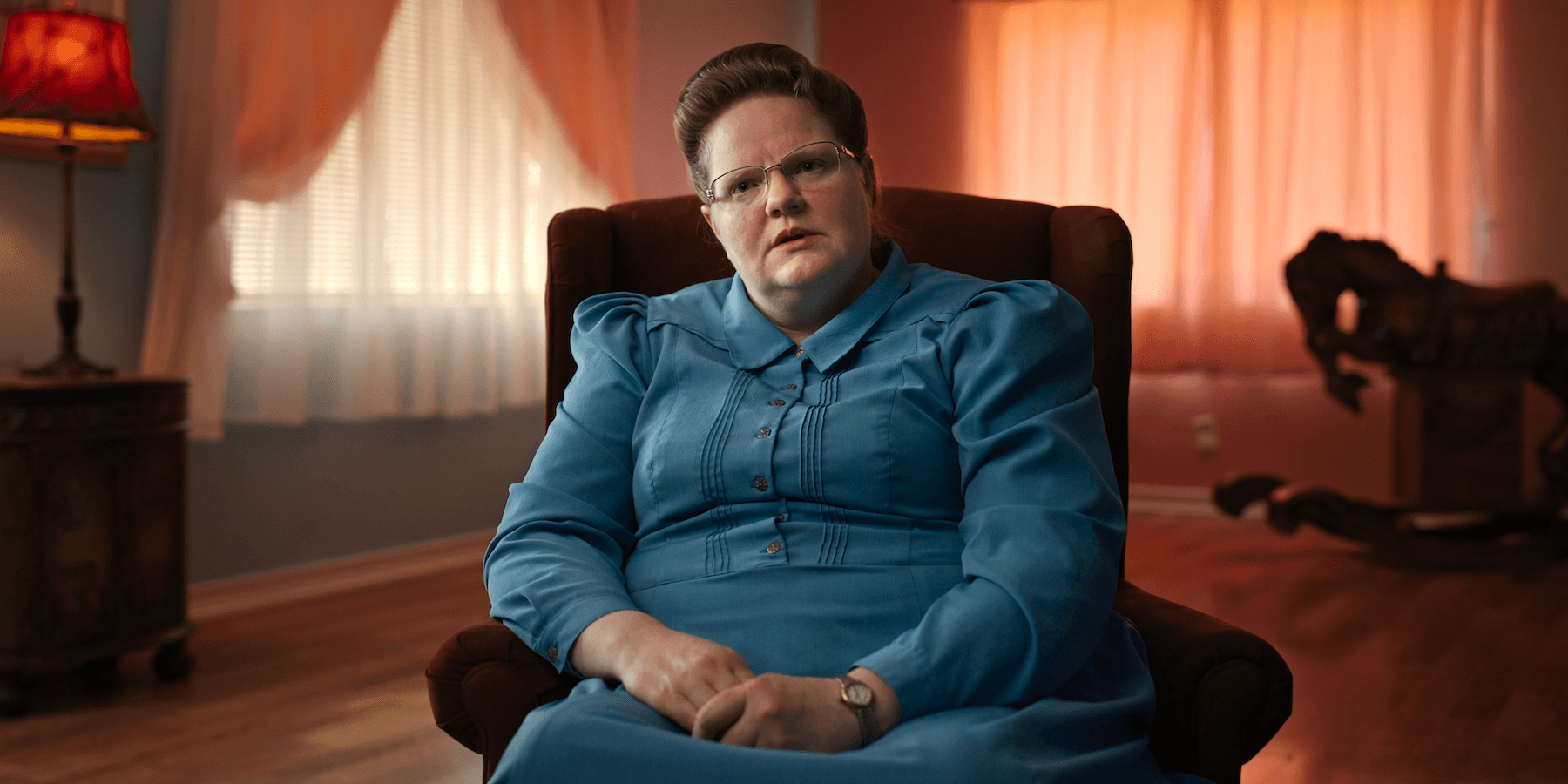
In the midst of making Trust Me: The False Prophet, her second Netflix docuseries in five years about sex crimes involving the Fundamentalist Church of Jesus Christ of Latter-Day Saints (FLDS), Rachel Dretzin was reminded why it all mattered. An underage bride of Sam Bateman, now serving 50 years for conspiracy to transport a minor for sex and conspiracy to commit kidnapping, told the director that her 2022 series, Keep Sweet: Pray and Obey, is what helped lead her to leave Bateman’s web of more than 20 “wives”—nine of whom were minors.
“It made me really feel committed that this story needs to be told. Not just for the women that still follow Sam, but for a lot of people who are under coercive control, these documentaries can have a real impact,” Dretzin tells Vanity Fair. “I know they can because I have the evidence.”
Her groundbreaking documentary, as well as undercover efforts by two zany outsiders to the FLDS community, helped birth the four-part docuseries Trust Me: The False Prophet, which premieres April 8 on Netflix. It exposes how the polygamist Mormon denomination led by Warren Jeffs, who was convicted in 2011 of sexually assaulting two underage female members of his flock, fell prey to another maniacal man.
As Jeffs (who inherited his role as “prophet” and president of the FLDS from his father, Rulon, in 2002) began serving a life sentence, Bateman, another self-proclaimed prophet, began marrying and sexually abusing female minors in the FLDS community. Meanwhile, Christine Marie, a cult expert, and her videographer husband, Tolga Katas, moved to Short Creek, Utah, in 2016. As two of the only non-FLDS residents, they saw an opportunity to endear themselves to this group and document Bateman’s crimes from within. The couple, who met Bateman in 2017, filmed him and his wives from 2019 through his 2022 arrest. Eleven of Bateman’s adult followers have also been convicted of charges related to child sexual abuse conspiracy.
“When I saw their footage, my mouth dropped,” Dretzin says of her winter 2023 meeting with the undercover filmmakers. “It’s truly some of the most extraordinary material I’ve ever seen as a filmmaker.” Their more eccentric qualities—“What should I wear when I take down a pedophile?” Marie asks her dog the morning of the FBI arrest of Bateman—made them additional assets. “I fully appreciated their colorful qualities from the start,” says Dretzin. “Christine wears pink cowboy boots. Tolga’s got the whole Turkish thing going. They’re really interesting, wild human beings.”
After this series, Dretzin’s work with women in the FLDS universe continues. “Waking up one day and being the star of a Netflix series is no small thing,” she says. “So there’s been a lot of effort to help them negotiate that. I was actually in the community last weekend, so I remain very connected.” In her first interview about Trust Me: The False Prophet, Dretzin shares why AI was integral to her powerful follow-up, and reflects on six years spent in this complicated enclave. “I’ve worked hard not to let this get too deep inside me. It does, I’m not going to lie,” she tells VF. “This one in particular was very heavy because it’s still going on—it’s not over.”
Vanity Fair: After Keep Sweet: Pray and Obey, why did you want to return to the world of extremist FLDS cults and what was most important to you in making a follow-up?
Rachel Dretzin: I knew I wasn’t done after Keep Sweet, in part because the FLDS community continued to be under the sway of Warren Jeffs even once he was in prison. In many ways, they were more vulnerable not only because they were leaderless, but because Warren had this decree that they could not have children or get married. So, you have thousands of people who couldn’t move forward with their lives. And that’s when I heard about Sam Bateman’s arrest.
Since Keep Sweet, Mormonism has taken over TV, from The Real Housewives of Salt Lake City to The Secret Lives of Mormon Wives. Why are audiences captivated by this religion’s culture?
The FLDS is not the same as the mainstream Mormon church, it is an extreme offshoot of the Mormon church that continues to practice plural marriage and has a very different structure. That said, there’s fundamental things about Mormonism in these extremist groups that are somewhat captivating because women in mainstream culture are seeing echoes in the tradwife movement, in the patriarchy that is integral to Mormonism. That might be part of it—the fascination with something that’s becoming a little bit true in mainstream culture. And also, I think Mormons do believe in a lot of really out-there stuff that’s interesting [to watch].
After Warren Jeffs’ arrest, what are the confluence of events that allow for a predator like Sam Bateman to infiltrate this vulnerable community?
This community is highly isolated. That’s the first thing to know. They’re in a remote part of Utah on the Arizona border. There’s very little interaction with the rest of the world. And I think that the premium from birth in that community is obedience and particularly, obedience to men. So, for women that can get very complicated when the man above you, whether it’s your husband or the prophet, is telling you to do things in the name of God that are wrong, but your entire worldview has told you that you must obey. So, that’s part of the problem.
The difference between the FLDS and most other cults is that people are born into it. It’s very, very unusual that somebody would actually enter the cult. They’re born into it. It’s all they know. Sam really took advantage of that. Many people in the FLDS did not believe that Sam was a prophet and actually rejected him, which is reassuring. But he was pretty wily and preyed on a particularly vulnerable group of people: young women who really wanted to have children, which they’d been prohibited from doing by Warren Jeffs. Sam convinced them that Warren had passed on a message through him that it was okay to have babies and get married, which all women in that community really are meant to do.
Were Christine and Tolga initially protective over their footage?
They were very cautious. They knew what they had, but they also knew how easily it could be exploited or sensationalized. And so, they were definitely slow to make the decision. Ultimately, we talked a lot, and what made the decision for them to trust me with the footage was that I did have a pretty deep knowledge of and familiarity with the community. It’s an unusual culture and it takes time to begin to understand it. But I think once they got to know me, they felt safe. They had been shooting for about six years, and had something in the range of 250 to 300 hours of footage.
Despite the fact that there’s been a lot of coverage of the FLDS, it’s almost all from the outside. Keep Sweet is a perfect example—almost everybody in that film had left the community. This footage is an unprecedented glimpse inside this very locked community. It's almost like home movies—you’re inside a world that you just never get to see in a very intimate way. That was the first thing that struck me.
Then I was just amazed by the performative way in which Sam enjoyed the idea that there were these filmmakers and almost created a movie in his little lair. The music video, for example. How crazy is it that a cult leader in a fundamentalist religious community would want his 21 wives to star in a music video? And that somebody would be shooting it and that you’d have behind the scenes footage of it?
Why are men like Sam Bateman or Warren Jeffs eager to document so much of their criminal activity?
Well, it’s an interesting question, isn’t it? I think Sam’s a megalomaniac. His ego was being stroked all the time by the little world he created around him. He was very proud of all these young, beautiful women that he had gathered around him. And because he was sort of a loser before all this, I think he was particularly interested in the attention. He wanted all this stuff put on YouTube.
Two of Sam’s former followers, Julia and Naomi, who goes by “Nomz” in the series, break their silence. How did you earn their trust and participation?
That’s really the heart and the guts of the story—these women who, against all odds, found a way to speak out. I can’t overemphasize how hard it is to do that when you grow up in that community. Christine told me that Julia was ready to talk. This was a very difficult decision because even though she didn’t believe in Sam, she was still part of this FLDS community that is really, really closed to the media, very mistrustful of it. She wavered a bit, but was quite resolute in the end that it was something she wanted to do.
Nomz was a bit different. I actually met Nomz shortly after she’d been released from prison. She spent two years in prison for a crime she committed at Sam’s request. Christine was holding a class in cult psychology for people in the community and Nomz was there. At that point, we had already started editing. I saw Nomz as perhaps his most devoted follower, so I was kind of stunned to see her there, but I walked up to her and almost immediately realized this is an extraordinary young woman. She was very open with me. I could tell she was hungry to talk about what happened to her.
She was very, very shaky, very fragile. You can see in the interview we did with her how fragile she is. She’s still coming out of it, which is why we actually interviewed her again later in her evolution because she just has continued to blossom. The Nomz that you would meet today is completely different than the Nomz you would see in the documentary because she’s just come into herself in such a wonderful way.
Are you talking to any of the women who still believe Sam is a prophet?
The fact that they believe in Sam makes it absolutely a no-no for them to have any contact with us. There were nine minors. They are all free of this. They’ve all testified against him. But their mothers, their sisters, the adults that were part of this group, the majority of them still do follow Sam. They live together. And I think they reinforce each other. They speak to him from prison, if not on a daily basis, on a near daily basis. He can still make calls. I believe he can still make video calls. So the mind control is still going on. Breaks my heart, actually. Although I’m really hoping that the documentary, because I suspect that at least some of them will watch it, helps unstick some of the hold that he has.
What went into the decision to obscure the identities of Sam’s underage victims without outright blurring their faces?
It was very important to see the emotions on these little girls’ faces, and to see that they were little girls. Had we blurred them, it would’ve had a very different impact.
The decision to use AI to conceal the faces of the nine minors was a really involved process that took about nine months, and a lot of human beings working with the machines to make sure that the AI was done sensitively and effectively. While I know it can be unsettling, as a filmmaker, I feel like it’s a protective and constructive way to use technology that can also be used to harm people, and I’m proud that we used it to tell a story that I think otherwise would’ve been really difficult to tell.
After having spent the last six years in this world, what do you feel is most misunderstood about these women or the environment in which they were raised?
A lot is misunderstood. We look at these women in their prairie dresses and hairstyles and meek demeanor—somebody in Keep Sweet called it the princess voice. They’re trained to speak like little meek little girls, even when they’re women. But I have never met such fierce, smart, ferocious, independent women as the women that I have met who have emerged from this community—and I include Nomz and Julia, who is still in the FLDS, but emerged from Sam’s group—among them.
They are fierce. And I don’t think people understand that, nor do I think people understand that these women are actually just like us. They’re very regular women who just happen to be born into this crazy structure. We see them as aliens, and I hope that the documentary humanizes them for people.
This interview has been edited and condensed for clarity.
Kiss Kiss Bang Bang: Glock’s Wild Succession Saga
All the Drama Surrounding The Drama, Explained
The Saga That Sent the Chess World Spinning
The High-Stakes Gambler, and Self-Styled Vigilante, at the Center of Paramount’s Legal Drama
Donald Trump Talks to Vanity Fair the Day After His Iran Address
What Queen Elizabeth Was Really Like
Exclusive: Lindsey Vonn on Life After Her Horrifying Crash
The Water Polo Scandal That Rocked LA’s Most Elite Private School
Kylie Jenner Enters Her Hollywood Era
From the Archive: What Really Happened the Night of Joey Comunale’s Murder