Can a Tech Podcast Enhance OpenAI’s Public Image? | Vanity Fair
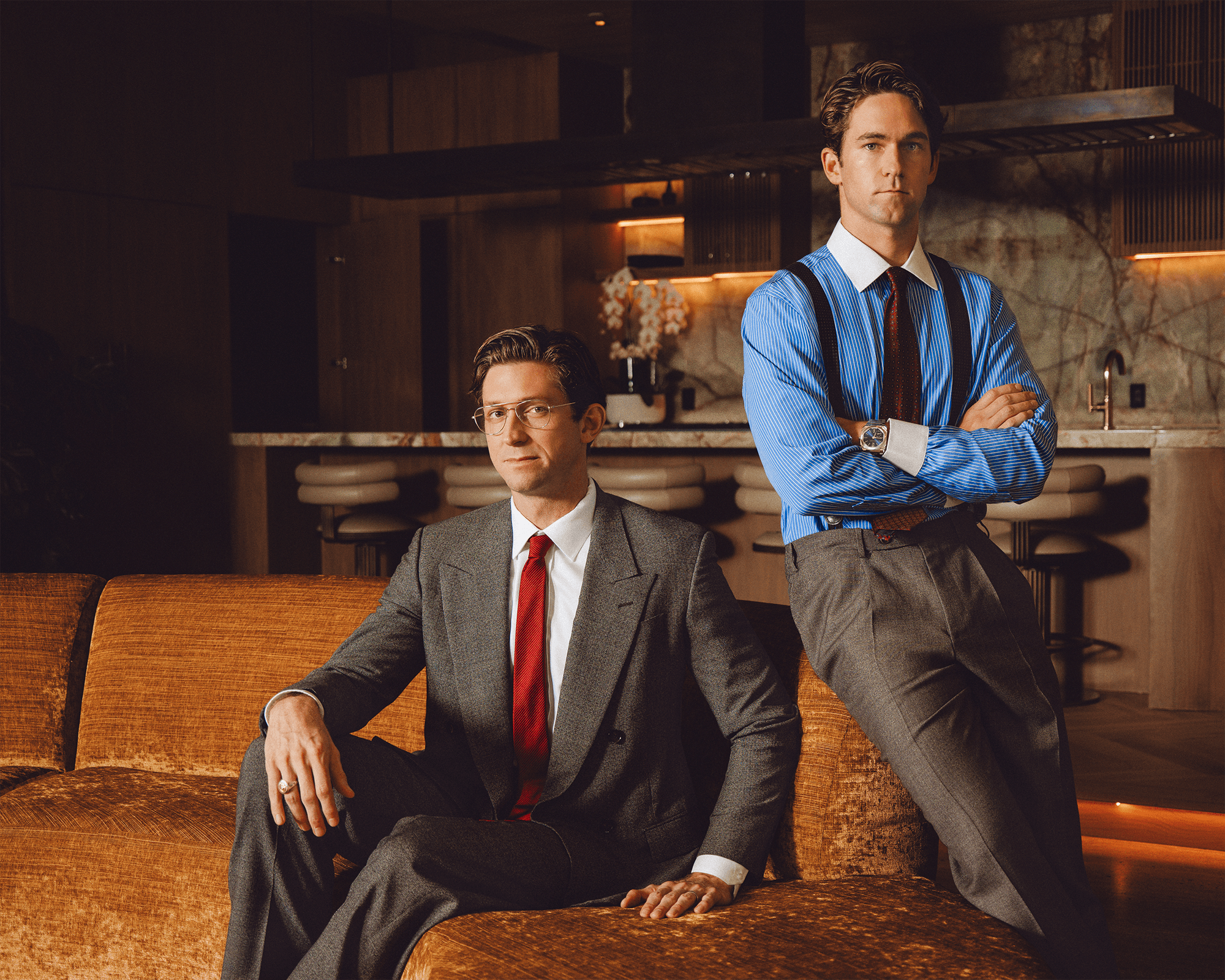
On Thursday afternoon, TBPN interrupted its regularly scheduled programming to make a big announcement: The year-and-a-half-old tech podcast had just been acquired by OpenAI. (The Financial Times would later report that a person with knowledge of the deal said it was in the “low hundreds of millions.”)
After I profiled the boys of TBPN in January, I’ve often been asked what explains their aura, given that their videos rarely rack up more than a few thousand views. My answer has always been that the TBPN signal reverberates loudly inside the Silicon Valley bubble. Founders and VCs who’ve appeared on the show have told me they are flooded with inbound the moment they hop off the livestream. In insular social circles where talent and capital are extremely concentrated, sending the right signal to even a handful of people can be a very valuable proposition indeed. Meanwhile, hosts John Coogan and Jordi Hays’s rare combination of expertise, humor, and basic likability has charmed even the most tech-skeptical mainstream media—including yours truly.
Does the nine-figure deal seem a little high from a pure business perspective? Absolutely. TBPN was on track to make more than $30 million in revenue this year—impressive for a small company—but that advertising-driven revenue stream will largely drop off as OpenAI becomes the show’s sole sponsor.
OpenAI’s CEO of applications, Fidji Simo, was the one who had the idea to acquire the show—a deal that was completed in just a couple of short weeks, I am told. This struck some business journalists as odd, given her prior promise to abandon so-called “side quests” to get laser focused on AGI. (Unrelated to the deal, Simo announced Friday that she is taking a brief medical leave from the company.)
But to understand why OpenAI really decided to buy TBPN, you need to understand a man named Chris Lehane, the legendary Bill Clinton spokesman turned Silicon Valley lobbyist who will be TBPN’s new boss.
Jordi Hays and John Coogan on the set of TBPN.
Often called a “master of the political dark arts,” Lehane is known for helping to defeat San Francisco legislation that would have limited short-term housing rentals by convincing lawmakers that an “Airbnb voter” existed in 2015. He later helped the crypto industry bully oppositional candidates into submission, resulting in huge regulatory victories for the industry. In 2024, after advising Altman on his effort to reclaim the CEO seat following the board’s surprise ouster, Lehane joined OpenAI full-time to run global affairs.
But as Charles Duhigg wrote in his 2024 New Yorker profile, part of Lehane’s magic was his ability to “appeal to politicians’ higher ideals” and make “the people he worked with feel like they were on a righteous quest.”
I suspected that Lehane’s vision for TBPN was less about product or business concerns and more about harnessing its irresistible goodwill to help rescue AI’s public image.
I hopped on a call with Lehane late Friday afternoon, and he told me as much. “There needs to be an enormous effort to educate the public on…both the opportunities and the challenges” that AI represents, he told me. “And I think these guys are uniquely capable of doing it.”
On a call with Coogan earlier that afternoon, he shared something similar with me. “Instead of focusing on lab rivalries and day-to-day back-and-forth between different companies,” Coogan told me, the next iteration of the show will focus on big-picture questions, like “What is the American AI industry doing? Is AI deployment going well? What can we do better?”
Frankly, this playbook makes total sense to me. The only thing I don’t understand is where on earth Lehane has been for the last 20 months.
I last profiled Sam Altman in 2023, when he was still playing the idealistic foil to Elon Musk’s new anti-woke, dark MAGA persona. (His signature move at the time was pleading for more regulation and warning of the dangers of AI even as he built it.) But as vice signaling spread across Silicon Valley, Altman and his company fell increasingly in line.
By the fall of 2025, it felt like most of the AI industry was engaged in a race to the bottom. When xAI launched its anime sexbot companions and Meta debuted Vibes, an endless feed of AI-generated video slop, I expected OpenAI to distinguish itself by leaning into its serious scientific research and promises of AI-enabled abundance.
Instead, OpenAI announced its own video generation tool, Sora 2. Two weeks after that, Altman declared a bizarre victory against mental health challenges associated with chatbots—even as a lawsuit worked its way through court accusing OpenAI of contributing to a teenager’s suicide. He even announced that OpenAI would begin rolling out adult services like interactive erotica.
Even as the virtue-signaling Anthropic gobbled up more and more of its customers, OpenAI seemed to remain oddly resistant to paying even the slightest lip service to the greater good. In December, OpenAI’s long-tenured chief of communications left the company. The role has yet to be permanently filled.
“There needs to be an enormous effort to educate the public on [AI] and I think these guys are uniquely capable of doing it.”
By February, as Altman committed fumble after fumble, I seemed to be hearing some variation on this tweet every day: “I assume OpenAI holds some kind of internal competition for worst comms idea in terms of likely perception by the general public and the winner gets to have their suggestions spoken out by sama.” And that was before the infamous Pentagon deal, which sent ChatGPT uninstalls surging nearly 300% in a single day.
Then, suddenly, it was like the company woke up one morning in March and decided it was 2023 again. OpenAI killed Sora and shuttered the erotica project. Altman expressed regret about the Pentagon deal, saying that he had “miscalibrated” the public’s distrust of the government.
And on Monday—the same morning The New Yorker dropped its bombshell Altman profile—the company released a new set of New Deal–inspired policy proposals that would make Bernie Sanders blush. The document calls for a public wealth fund to give every American a stake in AI-driven growth, a variety of new taxes, and pilot programs for a four-day workweek. On a Monday livestream, Altman responded to a colleague’s comments about universal unemployment and health care benefits: “I think it’s insane we don’t already have that.” To anchor its new lobbying posture, OpenAI will open its first DC office in May.
So what explains the suddenly pious attitude? Well, remember, OpenAI is approaching two major milestones this year. First, the coming IPO, which will open the company to an unprecedented level of transparency and accountability. Then the midterm elections, when a blue wave looks increasingly likely—and with it, a serious push to regulate the AI industry after two years of Trump-era free-for-all.
Of course, I am also reminded of a line from Farrow and Marantz’s Monday story about whether Altman can be trusted to do as he says: “As Altman publicly welcomed regulation,” they wrote, “he quietly lobbied against it.”
I’ll be watching to see how TBPN plays a role in communicating all of it—both on its own ongoing show, which is continuing to air in the same format, and as OpenAI’s new “in-house marketing agency,” as Lehane put it to me. (Coogan told me they plan to lean into events, as well as their own side quests, like a TBPN video game.)
TBPN and OpenAI have both insisted that the tech giant will not influence the podcast’s editorial point of view. The first test of that integrity arrived yesterday when The New Yorker article dropped—instantly dominating the tech world’s X feed, which is where the show usually finds its fodder. The next day, the article got a brief mention on the three-hour stream. Coogan's take was, unsurprisingly, heavy on the big picture: “The takeaway is that this is all extremely high stakes. There's a technological transition happening… and it's creating a lot of friction.”
Everything Trump Needs to Know to Broker a Deal With Xi Jinping
The Mansion, the Heiress, the Jewel Heist, and Me: A Bel-Air Fairytale
All the Drama Surrounding The Drama, Explained
A Complete List of Meghan and Harry’s Creative Projects
The High-Stakes Gambler, and Self-Styled Vigilante, at the Center of Paramount’s Legal Drama
Kiss Kiss Bang Bang: Glock’s Wild Succession Saga
The Saga That Sent the Chess World Spinning
The Water Polo Scandal That Rocked LA’s Most Elite Private School
Lindsey Vonn on Life After Her Horrifying Crash
Kylie Jenner Enters Her Hollywood Era
From the Archive: What Really Happened the Night of Joey Comunale’s Murder