Liza Minnelli Reflects on Her Gripping Memoir 'Kids, Wait Till You Hear This!' in Vanity Fair Interview
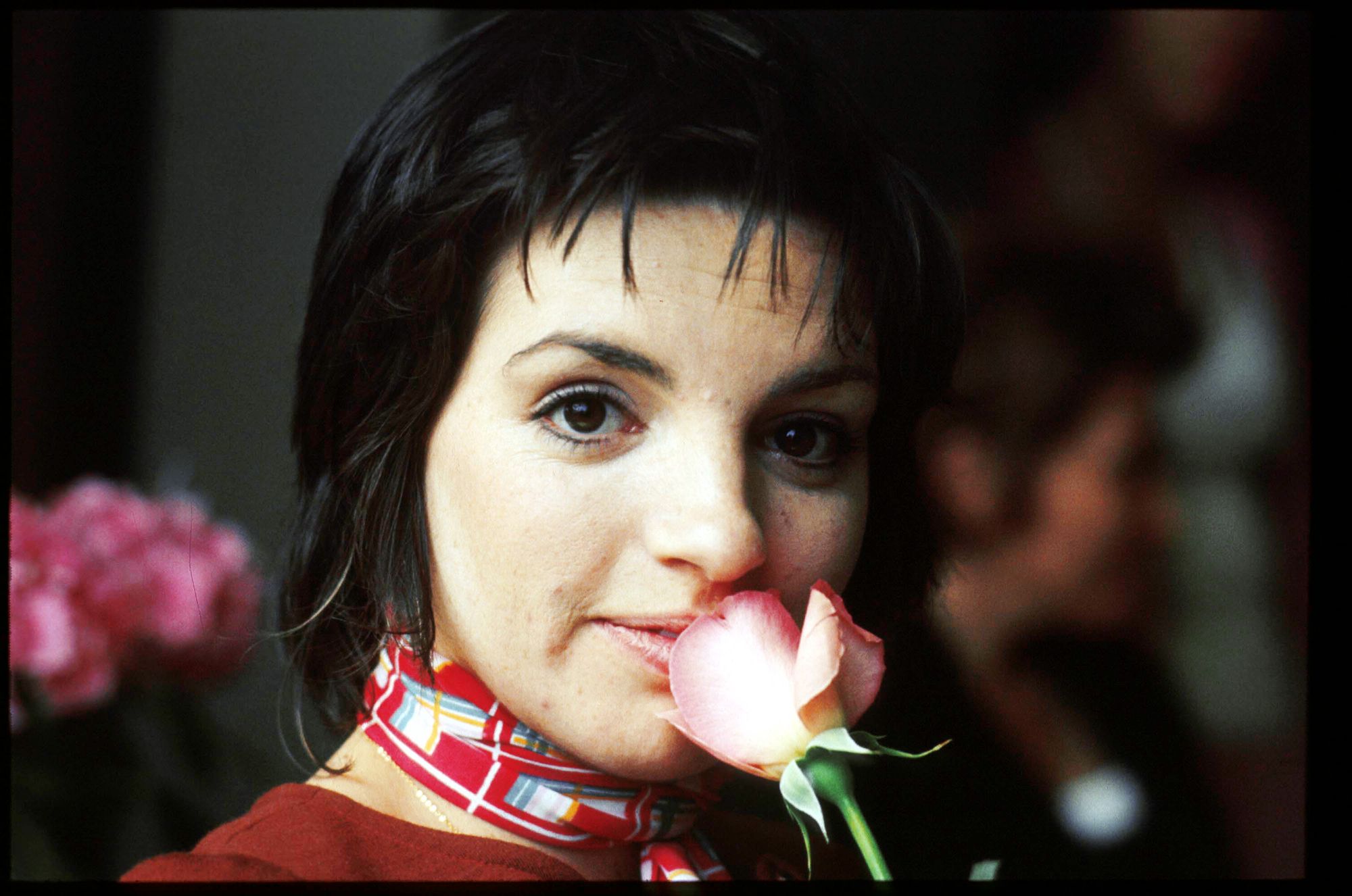
Few celebrity memoirs come as highly anticipated as Liza Minnelli’s Kids, Wait Till You Hear This! Her book, out March 10, arrives after decades of rumors and tabloid headlines about a life that has unfolded almost entirely in public view, since the day she was born to Oscar winner Vincente Minnelli and Judy Garland, aka Dorothy Gale.
The pages flip like a Rolodex, doubling as a condensed history of evolving celebrity culture from old Hollywood to the counterculture of the ’70s and ’80s to the present day. Elizabeth Taylor, Andy Warhol, Halston, Bob Fosse, Martin Scorsese, Mikhail Baryshnikov, Princess Diana. Frank Sinatra flew Minnelli to her first stint at the Betty Ford Clinic on his private Learjet. Michael Jackson was the best man at her fourth wedding.
Throughout the book, Minnelli is candid about her high highs, her low lows, and her self-described volcanic temper. Yet it’s her whip-smart sense of humor that carries readers through. She addresses us as “honey” and “baby,” punctuates memories with a well-placed “You bet your ass I could.” Chalk the cozy voice up to the book’s source material: years of recorded conversations with Minnelli’s longtime friend and consigliere, the singer and pianist Michael Feinstein.
“Michael understands the world I grew up in better than almost anyone,” Minnelli says in an interview conducted via voice note. “He loves that music, those stories, those characters as much as I do.”
Minnelli’s candor is striking as she discusses her struggles with substance use disorder (SUD) and her diagnoses of SUD-induced encephalitis, remembering with heartbreaking honesty when she passed out drunk on a Manhattan sidewalk in October 2003. “I collapsed, falling to the sidewalk, almost comatose. I lay on the ground for God knows how long. And the most horrific thing is that hundreds of people rushing down Lexington Avenue stepped over or around my body,” Minnelli writes. “What must they have thought?”
She also peppers her book with intimate confessions about her famous parents and many triumphs, as well as boldface lovers (Desi Arnaz Jr., Peter Sellers, Ben Vereen) and a fourth marriage to a man she calls a “clown” and a “loser” (David Gest—but more on him later). Here, we run down the juiciest tidbits from the memoir—with bonus commentary from Minnelli herself.
Liza (with a “Z!”) May Minnelli, entered the world on March 12, 1946 as the only daughter of two towering figures from Hollywood’s Golden Age: Judy Garland, whose voice was one of the defining sounds of 20th-century entertainment, and Vincente Minnelli, the MGM director behind a string of musical masterpieces (including Meet Me In St. Louis, The Band Wagon and Gigi). “My parents worked at big, bad MGM studios,” Minnelli says in the interview. “By the time I was born, Mama was already a star. And she would never not be a star. Papa was a director who practically invented gorgeous, lush musicals. I got my dreams from Papa, and Mama gave me drive.”
Given her parents, Minnelli has been known to quip, “I came out of the womb looking for the camera angle.” Little wonder, then, that she made her screen debut at age three, opposite her mother in the closing moments of In The Good Old Summertime (1949).
By her early teens, the drive and the dreams she inherited were starting to manifest. But Minnelli was also getting the sense there might be other, more insidious things imprinted in her DNA. Her father had always been her “rock made out of honey,” she writes. But her mother?
In the memoir, Minnelli recalls clowning around with her parents at the age of five, wearing cowboy boots and attempting a backflip. “I reared back and shot out my legs, and a boot accidentally smacked Mama in the head.” she writes. “Suddenly she was screaming at me. She screamed and screamed, and it seemed as if the yelling went on for hours.”
Minnelli came to understand that her mother was riding a roller coaster of drug dependency that traced back to Garland’s earliest days at MGM, when studio executives regularly supplied stars with uppers and downers. “I learned that if Mama got angry,” she writes, “she was the most terrifying person in my life.”
Minnelli’s parents divorced when she was five. “At thirteen,” she writes, “I was my mother’s caretaker—a nurse, doctor, pharmacologist, and psychiatrist rolled into one. It was a crazy balancing act.” Some duties were clandestine: Minnelli started to replace the pills on her mother’s bedside table with aspirin as one of her doctors told her Garland might die if she took more than two sleeping pills a day.
But there was another side of Garland as well, one her daughter is happy to remind us of today. “My mother was hilarious,” she says.
One anecdote about a drunken fan who approached Garland in a ladies room stands out. “The woman wobbled up to her and said again, ‘Judy, don’t forget the rainbow’.” At which point, Minnelli writes, “Mama tossed a boa over her shoulder, pushed open the door, and said, ‘Madam, how could I possibly forget the rainbow? I’ve got rainbows coming out of my ass!’”
At 16, Minnelli decided to drop out of school and trade the Technicolor haze of Hollywood for the footlights of Broadway. “Yes, I had famous parents,” she writes. “But in New York, that wouldn’t even get me a free subway ride…theater is a bitch.”
When Minnelli was ejected from the Barbizon Hotel for Women for failing to pay her rent, she slept for a few nights on a bench in Central Park. “You know, the place you’re not supposed to go after dark? God smiled down on me, because no one attacked me, and I went about my business the next day,” she writes.
Soon, the breaks began to come. In 1963, Minnelli landed a role in a revival of Best Foot Forward; by the following year she was appearing with her mother at the London Palladium, where she caused a sensation. Yet even as Minnelli’s star began to rise, the dynamic between her and Garland grew complicated.
“I began to notice something in the wings,” Minnelli writes in the memoir. “Mama was watching me intently. After my first song I heard her shout, ‘Yeah, baby! Go get ‘em!’ After the second song, another ‘Yeah!’ but not quite as strong. By the third song, let’s just say she was losing enthusiasm. When I finished my last song, I heard her whispering to our producer, Harold Davison: ‘Harold, get her off my fucking stage!’”
Those performances got Minnelli an audition with the songwriting duo Kander and Ebb for their new musical, Flora, the Red Menace, which opened in May 1965. Later that year, in a glittering ceremony at the Astor Hotel Ballroom, a 19-year-old Minnelli won the Tony for best actress in a musical—the youngest performer ever to do so. It was the first check mark on the road to EGOT status.
Hollywood soon came calling. “And I wasn’t playing hard to get,” Minnelli writes.
In early 1969, Judy Garland announced she was marrying her fifth husband, Mickey Deans, a London musician, sometime drug dealer, and former vacuum salesman.
“When Mama called to invite me to their wedding in London, I blurted out: ‘Mama, I can’t make it to your wedding’,” Minnelli writes in the book, promising instead to come to “the next one!” Garland laughed. “‘All right, Liza. All right.’ We hung up with lots of love. It was the last time we spoke.” Just over 90 days after the wedding, Garland died of a barbiturate overdose in London at 47.
Minnelli cried for eight days straight, she writes, and was left to sort out the funeral arrangements largely on her own. She recalls that the stress led her to the first pill she ever took: a Valium, given to her by a doctor after her mother’s death. “I marveled at how quickly it took the edge off. Where had it been all my life?” she writes.
Meanwhile, her star was rising. Minnelli set her sights on a role that, back in New York, had eluded her: Sally Bowles, the lead in Cabaret. She was cast in Bob Fosse’s film adaptation of the hit musical, and soon, it was tough to see where Minnelli ended and Sally began. The performer’s signature look gelled on set: saucer eyes, spider lashes, and that jagged, black pixie cut.
“Bobby encouraged you to take risks. To be strange. To be bold… Bobby had created this dark, smoky, decadent atmosphere that was completely immersive. I remember doing the number ‘Mein Herr’ and realizing that Sally Bowles wasn’t just a character—she was a whole attitude,” Minnelli tells us. “And when we finished filming,” she recalls in our interview, “I had the feeling something very unusual had happened. It wasn’t like any musical anyone had seen before.”
The film, released in 1972, won eight little gold men at the 45th Academy Awards, including best actress for a 27-year-old Minnelli. Her and Fosse’s razzle-dazzle streak was just getting started. Also in 1972, they turned their attention to the small screen and delivered Liza With A “Z”, a groundbreaking televised concert event that won Minnelli a Primetime Emmy—EGOT check mark number three. “At that moment, my life was like the inside of a diamond, crystal clear,” she writes.
“Life took its course until I discovered Studio 54 in the spring of 1977,” Minelli writes. “When I rediscovered what it was like to be a kid. To have fun!”
Manhattan nightlife had become what Minnelli describes in the interview as “a crazy-quilt group of New Yorkers,” who gathered regularly after the sun set. At its center stood the nightclub on Broadway and 8th Avenue where Minnelli held court, often clad in Halston.
“People think it was just a wild party,” Minnelli says today. “Yes, there was plenty of that. But what they sometimes forget is how creative that time was. Artists, designers, musicians, actors —everyone was mixing together. You might walk in and see Bianca Jagger, Halston, Elizabeth Taylor, Andy Warhol, and Frank Sinatra all in the same room. It felt like a collision of different worlds. It was chaotic, yes. But it was also incredibly alive.”
But as the club “burned baby burned,” something insidious was creeping further into Minnelli’s life: “Alcohol, benzodiazepines, barbiturates, amphetamines, and cocaine,” she writes.
“Overnight, it seemed, I’d gone from being an original ‘nepo baby’ to Sally Bowles—a hot mess of ambition, lovable quirks, crazy sex, and selfish manipulation,” she writes. “I had ‘trouble’ stamped all over me, because of the intensity I brought to everything. Somewhere, underneath all that, was the real me. But who was I now? I didn’t know. It was a hard question to answer when the spotlight was much brighter and more unforgiving than I ever expected.”
The same nightlife that produced legendary collaborations also provided a ready pipeline of pills, powders, and cocktails strong enough to flatten the horse Bianca Jagger famously mounted when celebrating her 30th birthday.
One oft-repeated story involves Minnelli showing up at Warhol’s doorstep. “‘Give me every drug you’ve got,’ I said, and he handed over some cocaine, marijuana, Valium, and quaaludes,” she writes. She did multiple rehabilitation programs, writing in the book’s prologue, “I’ve been sober for eleven years. It’s the greatest personal victory of my life.”
When asked whether revisiting those years felt painful or liberating, Minnelli answers, “It was both… Some of those years were chaotic and painful… But there’s also something very freeing about saying, yes, that happened—and I survived it.”
Minnelli’s love life often played more like grand opera: dramatic entrances, explosive duets, and the occasional spectacular collapse. “But you know that nothing is ever simple with me,” she writes. She goes on to recall her “passionate romance” with Martin Scorsese while starring in his film New York, New York in 1977, which became fodder for Andy Warhol’s famous diaries.
“Andy learned from a friend that I was taking a walk with my husband, Jack, in Greenwich Village one morning,” Minnelli writes. “We turned a corner and ran into Marty, with whom I was having an affair. He began berating me, because he’d heard that I was also having an affair with dancer Mikhail Baryshnikov. I was cheating on him. Well, let me explain! Mikhail had come backstage to see me after a performance of The Act...we hit it off immediately and later ended up in bed. So there we all were on the street: me, my husband, and Marty.”
Her romances rarely followed a tidy script. In 1967, Minnelli married Australian singer-songwriter Peter Allen, a dazzling performer Garland had championed early in his career—whom she found in bed with another man shortly after their union. In 1974, she wed Jack Haley Jr., son of the actor who played the Tin Man in The Wizard of Oz. Her longest marriage was to Mark Gero, a sculptor and stage manager, whom she married in 1979 and weathered two miscarriages with. “To this day, I can’t talk about these events without sadness and anxiety,” Minnelli writes. “The inability to become a mother is a tragedy I will never get over.”
Then came a tabloid spectacle that still haunts Minnelli. At 56, she married concert promoter David Gest in 2002. The 850-person guest list included Diana Ross, Mia Farrow, Elton John, and Donald Trump, turning the Manhattan event into one of the era’s most star-studded celebrations.
“I clearly wasn’t sober when I married this clown,” she writes. “Gest was a fast-talking, wheeler- dealer promoter who wore more makeup—including mascara—than I did. Whenever I looked for my missing eyelashes, I checked his bathroom.”
Gest, she felt, had conned her at a time when she was vulnerable, eventually controlling who she saw and what she ate, making her feel like a “prisoner.”
“Soon we were fighting physically, like animals, shouting and screaming at each other. I throw a mean punch, baby,” Minnelli writes. The reality star would go on to claim he suffered amnesia after she hit him with a stiletto during one dust-up. The marriage itself collapsed within a year amid lawsuits and tabloid headlines.
Years later, Minnelli summons gallows humor about the whole saga. When Gest died of a stroke in 2016, she recalls reacting instinctively to the news. When Feinstein called to talk after she’d already gotten past the initial shock: “I said, ‘Ding, dong, the witch is dead!'” she writes.
There has always been something about Minnelli’s face: a bright openness that pulls you closer, makes you root for her. It is the face of a performer who has traveled the long distance from diva to grande dame and made it to 80, cementing her EGOT status with a Grammy living legend Award in 1990. “Another plus of living a long life?” Minnelli writes. “I’m too tired to give a damn about things that used to torment me.”
So when a friend asked, “Liza, are you really going to continue letting people make money off of your life and get it wrong? It’s the kind of thing you did before you got sober. Do you want this to keep happening?” Minnelli’s answer was obvious. “I’ve got to tell my own story and write my own ending,” she writes. “Because nobody else can.”
This March, Minnelli returned to the stage at the GLAAD Media Awards, where she was honored for her memoir and was serenaded by the crowd. “The GLAAD evening was bliss! There was a current of excitement between us that made being onstage again so magical,” she tells Vanity Fair. “This courageous community has always showered me then and now with pure love—even when other people did not…been seen and embraced and at that event, my life, my work, my heart were lifted to heaven!”
For Minnelli, the stage remains the one place where everything makes sense.
“You know the song ‘Maybe This Time?’ It’s about hope,” she says in the interview. “About believing that the next moment might be the one that works out. I think I’ve always had that feeling somewhere inside me.”
*Excerpted from KIDS, WAIT TILL YOU HEAR THIS!: My Memoir by Liza Minelli as told to Michael Feinstein with Josh Getlin and Heidi Evans, published on March 10, 2026. Copyright © 2026 by LMM, LLC and Terwilliker, Ltd. Used by arrangement with Grand Central Publishing, a division of Hachette Book Group. All rights reserved.
How Love Story Recreated JFK Jr. & Carolyn Bessette’s Wedding
Golden Girl Alysa Liu Takes a Victory Lap
Our Final Winner Predictions For the 2026 Oscars
How the Vanity Fair Oscar Party Changed Hollywood—and Vice Versa
The Water Polo Scandal That Rocked LA’s Most Elite Private School
Life After Getting Fired for Posting About Charlie Kirk
How TikTok Became a Go-To Source for the Epstein Files
Paul McCartney, Unfiltered: On John Lennon, The Beatle’s “Hugely Painful” Breakup, and More
The New Epstein Files Are Reopening the Pizzagate Box
The 10 Things That Haunt Me From the Latest Batch of Epstein Files
From the Archive: The Unraveling of JFK Jr. and Carolyn Bessette-Kennedey