"Jacob Elordi Returns to 'Euphoria' Set as a Movie Star Following 'Frankenstein' Role | Vanity Fair"
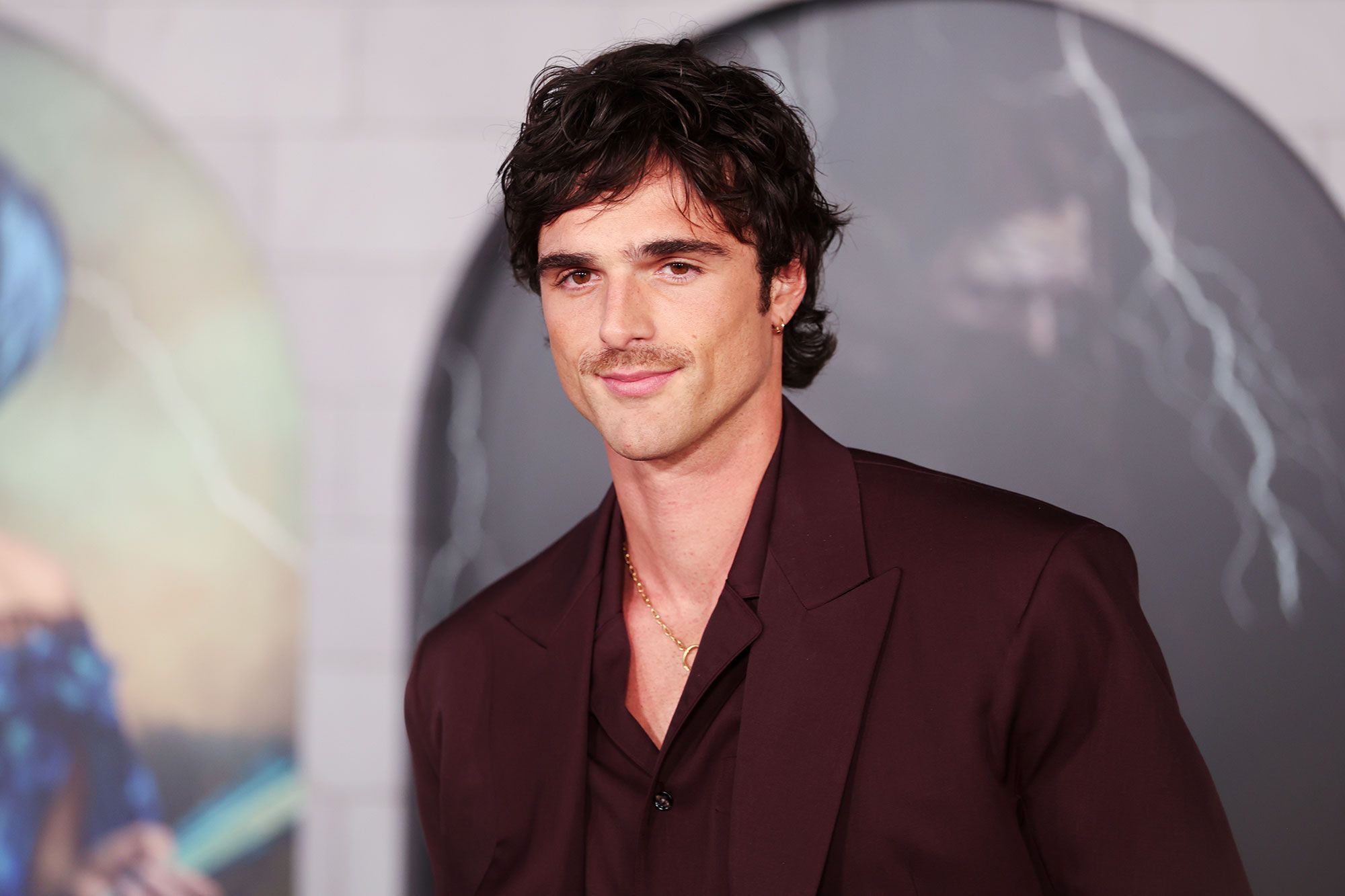
If there’s a theme to Jacob Elordi’s life right now, it’s transformation.
The Australian actor first turned heads in the Netflix film series The Kissing Booth. He moved to the hit HBO series Euphoria in 2019 before becoming a full-fledged movie star with Sofia Coppola’s Priscilla and Emerald Fennell’s Saltburn; soon, he will headline Fennell’s adaptation of Wuthering Heights as Heathcliff, opposite Margot Robbie.
Elordi recently returned to his TV roots to film the long-awaited third season of Euphoria—and, as he tells Little Gold Men, it was a life-affirming experience to go back to set after a busy several years away.
Elordi’s biggest onscreen transformation comes in his most daring role yet. For Guillermo del Toro’s recent Netflix epic, Frankenstein, Elordi underwent hours of makeup and prosthetics application to become the titular scientist’s creature. Yet Elordi’s work as an actor is never lost under all that makeup—only enhanced. His monster is both otherworldly and physically terrifying, halting but deeply soulful.
Elordi had a limited amount of time to prepare to play one of the most iconic characters in history. Andrew Garfield was previously attached to the role; when he dropped out due to scheduling conflicts, Elordi signed on with only about nine weeks until filming. At the time, he was shooting the WW II miniseries The Narrow Road to the Deep North, so he couldn’t even jump into preparation right away. “I was very lucky that I had lost a great deal of weight because we were playing prisoners of war—so a lot of my instincts and my physicality were kind of very primal at this point,” he says. “A lot of my world was frightening and restless and sleepless, and so I was coming into it sort of already with the bones of the character in the character that I was playing.”
When he finished the series, he headed to the woods, spending four weeks getting into the headspace of the creature. On this week’s episode of Little Gold Men (listen or read on below), Elordi reveals what Frankenstein’s creature has to do with Jesus, if Euphoria’s Nate can find redemption next season, and what he thinks about AI coming for Hollywood.
Vanity Fair: With such a short amount of time, how did you prepare to play the creature?
Jacob Elordi: I couldn’t really afford to be intellectual about it, because I was shooting something else. I had this book, with images and references and things in colors. And in this book, I learned to write in my left hand, which is a disconnect for me because I’m right-handed. Which started to help me with understanding the uncomfortability of the physicality. Then, when I left the show I was working on and I went home—I live in the woods, alone; it's quite a beautiful space—everything calmed and slowed down in those four weeks. It ended up feeling like 20 weeks. I just tried to open up the way I looked at the world. I tried to experience the way the wind felt on my face when I was cold. I’d consider what cold meant to me with all of my life experiences, and then thought about what cold would mean to somebody who’s made of different parts and has no sort of previous life experience.
What was it like the first time you saw yourself in full makeup and prosthetics?
I was buzzing with excitement, because that was also the point in which I was going to learn whether I was going to be unrecognizable—which was a fear that I had, because I wanted to play the version that was a character, not just a symbol. I’d seen [the prosthetics] on a bust, but you still don’t know what that’s going to look like when it sort of fuses with your face. They were working with pieces that had already been made for another actor. In my head, it was still a very real thing that I might not end up getting to be in the movie. But when [the prosthetics] went on, it did feel like, here was this perfect fusion.
Was it at all freeing to not have to consider your looks, as someone who has been described as a heartthrob?
I suppose people’s perception of me, or the labels that are created about me, is kind of what the movie is about in a lot of ways. I don’t identify with that, nor do I consider anyone’s opinion of me. I’ve acted with the same vigor and passion and intensity since I was 14 years old. I’d be kind of screwed if I listened to what people had to say about my appearance when I’m trying to be an actor. The whole purpose of that is to immerse yourself in a different skin and hopefully disappear.
Frankenstein is just the most literal version of that.
Yeah, I suppose maybe it takes a mask sometimes for people to see the truth of something.
Elordi in Frankenstein.
Guillermo is known for his monster movies. How do you see his version of Frankenstein fitting into the lineage of either his movies or monster movies in general?
He talks a lot about how he’s been rehearsing this movie since he made Cronos. All his films, to me, are perfect in their own kind of way, and there’s a few in there that are perfect—like, perfect movies. And this, to me, is his masterpiece. The craziest thing is, I know he still has so many more in him. But this film is so deeply personal, and the more that I know him and the more I spend time with him, the more I learn about the film. In hindsight and in the world of monsters, I don’t think you could get a more empathetic or understanding lens put on a creature than from Guillermo del Toro. He believed in this creature, when he was younger, as Jesus. So you’re getting full-blown spirituality in this film. There’s a few people that can capture spirituality like that cinematically, and I think he’s done that in this film.
That seems like a lot of pressure for you. Did he tell you that Jesus concept before you shot?
Yeah. Do you know what it was, though? It was really an invitation to take it as seriously as I had felt. Movies were my whole life. People love to say, you know, “It's just movies, not life or death.” And I’m sensible in many ways—but it is life or death to me. And I had this man telling me, “This is life and death. This is everything. This is an examination of all of it.” When we first spoke, he called me and he said, “This prosthetics process, it’s not makeup, it’s not paint.” He said, “This is the sacrament. It’s holy.” And when he said that, that’s like somebody giving you the golden ticket. That’s somebody saying, “Hey, here’s permission to go all the way.”
You’ve also recently wrapped the long-awaited third season of Euphoria. What was it like to return to the show after so much time?
I had so much fun shooting the show. It felt like I was playing a completely different character, because so much time has passed. It was also exciting to come back because on the first season of that show, I would bug [series creator] Sam Levinson about how badly I wanted to make movies and how much I love movies. I felt like the prodigal son returning with my bags full of stories of the movies I’d made. I was like, “Father, look what I have gathered!”
Is it possible for Nate to find redemption, or is that even something you’d hope for that character?
Did you watch Frankenstein?
It and Euphoria are in conversation, I would say.
Yes. It’s possible for everybody to have redemption. Guillermo said something great: He’s like, “The biggest and the hardest step is the conversation. The conversation doesn’t need to yield a result, but you have to have the conversation.” It’s the only way you can move toward redemption. I would like to believe that there’s redemption for everybody, and if not redemption, possible understanding.
Do you feel like Euphoria was the turning point or catalyst to you getting that career in movies you wanted?
I suppose so. I had gotten the opportunity to work with [Deep Water director] Adrian Lyne at the same time as making Euphoria. I’ve always been very lucky in the sets that I found myself on, but I felt a noticeable change—whether it was just because I finally felt like I was being given the work that gave me the opportunity to do the sort of prep that I wanted to do, to play the characters that I’d wanted to play for a really long time. I think when I worked with Sofia Coppola, there was, for me, a noticeable sort of shift in perception. But it had also taught me a little bit about the world, because Euphoria alone is full of excellent performances—like really, really detailed work. But then it gets lost in this kind of social lens, because of the popularity. In Australia, [we call it] “tall poppy syndrome.” When something is so big and universally acclaimed, it does lose some of its punch. Or it’s uncool to like it because so many people like it.
Guillermo del Toro has been speaking out against AI in filmmaking. What’s your view on AI’s possible effects on your industry?
As a human being, I have no tolerance for it—nor the ever encroaching, constant conversation that we keep having about it. Even being asked about it. I just have no interest in it at all, because it’s so fucking boring. That’s ones and zeros. That’s numbers. It’s digital. I can’t focus on it. It bores me, personally. If it’s your interest, go nuts in your garage; play around, build a robot. But as far as I’m concerned, I would much rather kiss on the beach, and read a novel, and be sunburnt.
On that subject: Outside of Hollywood and filmmaking, what are you passionate about and interested in today?
It’s Hollywood and filmmaking.
That’s the cheat answer.
I know! I mean, I am so in love with art, and particularly when it’s done through storytelling. I’m moved by everything: photographs, paintings, music, discovering new music, sharing an interest with somebody. When I go home and I walk past a 60-year-old man on the beach and he says, “G’day,” I get a flutter in my stomach because I’m home. That’s what I mean when I say there’s so much out there. We tend to slip into this thing at the moment that everything’s damned. But if this is, like, the last little moment, it’s still so painfully beautiful. There’s so much. We still have books being published. We can still go have a coffee. You can still hug your friend. I can still pat my dog. There’s still so much to care about and so much to love.
Glenn Close and Jeff Goldblum on Pranks, Professionalism, and Everything In Between
All the Musicians Who Have Told Donald Trump to Stop Using Their Music (This Term)
Meet the 11 Best Movies of 2025
The 13 Biggest Snubs and Surprises From the Golden Globes Nominations 2026
As Netflix Swallows Warner Bros., Hollywood Is in Full-Blown Panic Mode
Even Christians Have Had Enough of Ballerina Farm
The 19 Best TV Shows of 2025
Unpacking the “Atom Bomb” of the Oscar Wilde Scandal
The 2026 Hollywood Issue: Let’s Hear It For the Boys!
From the Archive: Behind the Mysteries of Capote’s Swans Scandal