'Sinners' Star Michael B. Jordan Discusses Therapy, Confronting Toxic Masculinity, and Personal Growth in Relation to 'The Thomas Crown Affair' | Vanity Fair
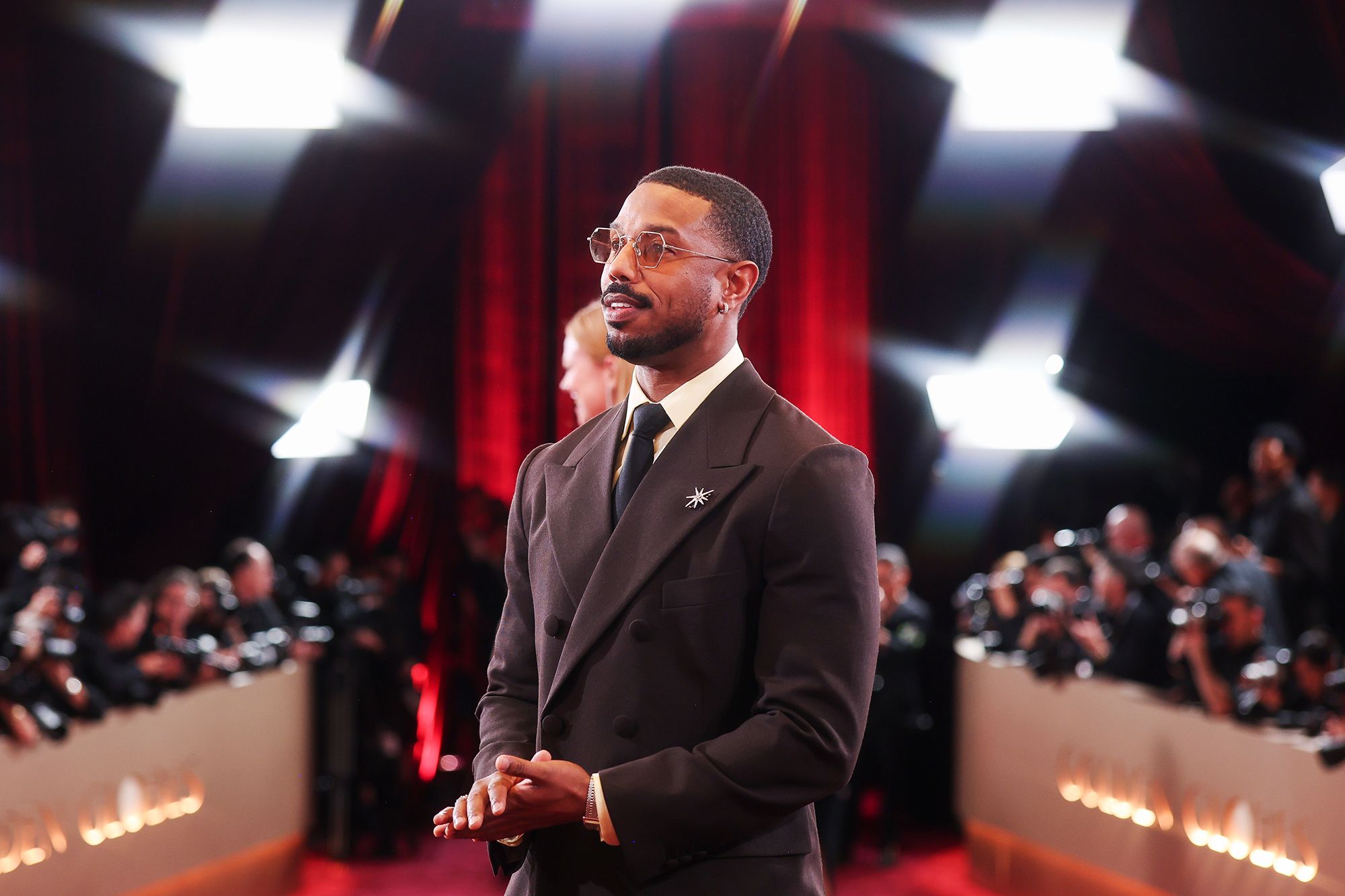
In the span of three days, Michael B. Jordan celebrated his 39th birthday, had a Super Bowl party with his family (including some postgame karaoke), and attended the Oscars 2026 nominees luncheon as a first-time nominee.
“When did too much celebrating become a thing?” Jordan tells Little Gold Men with a smirk. “I’ve been so blessed and fortunate to have so many things going on—and successful things at that.”
Jordan has so much to celebrate, earning his first Oscar nomination for playing twins Smoke and Stack in Ryan Coogler’s Sinners. The film earned a history-making 16 Oscar nominations, along with being a box office smash, and much of its success is due to Jordan’s delicate and dynamic work as two wholly unique characters.
Sinners is a culmination of the career-spanning collaboration between Jordan and Coogler, who first worked together on 2013’s Fruitvale Station, followed by Creed (2015), Black Panther (2018), and Black Panther: Wakanda Forever (2022). Their partnership has resulted in the most demanding work of Jordan’s long career, which started when he was just 12 years old (with a brief appearance on The Sopranos) before his breakout on The Wire when he was 15.
Jordan has been intentional in the way he’s built a Hollywood career, becoming a producer and, eventually, a director with Creed III. As he’s been promoting Sinners for the past year, he’s been hard at work on his next directorial project, a remake of The Thomas Crown Affair, in which he also stars. Now, along with all that celebrating, he’s spending all his time editing the film, which is scheduled for release in March 2027.
After the Oscar nominees luncheon earlier in February, Jordan took a little time out of his packed schedule to talk to Little Gold Men (listen or read on below) about the demanding dance of playing twins in Sinners, how therapy has helped him as an actor, and why helming The Thomas Crown Affair has been much more challenging than his first directorial effort.
Vanity Fair: What was your very first step when you decided to take on playing Smoke and Stack for Sinners?
Michael B. Jordan: I had to write their backstories. I got journals for Smoke and Stack, and had an opportunity to really crack through their childhood with Ryan, and be as colorful as we needed to be. Go through those milestones, the childhood trauma that they carried with them, the trauma of their environment and the world that they were living, the era that they were living in. And then everything else is like building a house—it’s layers and layers and layers that you kind of have to dive into. And then doing some chakra work and some energy work to really identify where he’s holding his pain, where he’s holding his trauma, and let that dictate and determine a little bit of his cadence in which they speak, the way that they walk.
Can you talk about filming the opening scene? Because when they pass that cigarette between each other, it really proves that this whole thing of you playing both twins is going to work and is not a gimmick.
It was 120 degrees. It was so goddamn, damn hot! It was probably the hottest day to shoot it. But it was a really ambitious shot that we’d been talking about all through preproduction, and one of the ones that we used for one of our camera tests—the technicality of continuity of hitting that mark, over and over and over again, and finding how to pass it. And I’m not gonna look at you because they’re twins—they’ve been doing this all their lives, so it’s secondhand nature. It took a long time but that shot symbolized a little bit of the egg multiplying: It starts out as Smoke being the oldest since he was the first, and then you see the twin as the egg kind of divides.
Is filming a scene with that stillness harder than one with action, like the fight scene toward the end?
They’re both extremely hard, but for different reasons. I would say the cigarette [scene], because of the elements at the time, the stillness and the margin for error was like nothing. You either get it or we didn’t get it, you know? Fighting myself, there was a formula to it, and that was an evolving, growing thing as we were shooting.
Would you say this is the hardest role you’ve ever had?
Yes, for a lot of the obvious reasons of playing two people and the fact that I didn’t have something that I normally have as a performer, which is the ability to improv and be spontaneous. Whatever brother goes first sets the rules and the boundaries because the second take that I do, I’m marrying to that first performance. So if I walked in a certain area or if I occupied a certain space on set or said something, when I become the other twin, I can’t walk in that same space at the same time. I can’t talk over him, so I have to leave these spaces.
Did you always shoot one brother first or did it vary?
It really varied. We tried to do that a few times, but just depending on where the scene was and the setup, it’s actually kind of too selfish to always stick to one brother. I would always want to go with Stack first, personally, because Stack speaks in a higher octave. He has more energy and he’s more talkative normally. Smoke’s in a lower octave and he doesn’t move around as much. By the end of the day, I’m like hanging on by a thread, so it always felt easier on me to do Smoke last, because I can naturally fall into a lower register because I’m tired. Also, I’m smoking fake cigarettes all day, so my voice would be just shot by the end of the day.
Jordan in Sinners, which earned 16 Oscar nominations.
Smoke and Stack. Erik Killmonger. Oscar Grant. A lot of the characters you play have a lot of emotional weight to them. Do you ever have trouble letting go of characters?
When I was younger maybe. Maybe a decade ago it was harder to let go. Look, I ain’t had no blueprint to any of this shit. I’m figuring this out as I go, trial and error. Shit—therapy, you know? And also there’s a part of these characters that are never going to leave me. These characters are a piece of me. That’s comforting.
It helps when you discover therapy.
I encourage it. How you communicate your feelings—especially for men, and Black men at that—that toxic masculinity and what that looks like. I’m an advocate for talking.
You’ve been working since you were quite young. Do you remember a moment when you had to really commit to this as your career as an adult?
When I decided not to go to college and moved to LA. That was the point of no return. My dad was very “be serious about something” at the time. A lot of people from that generation think school is the way to get to some stability and security. And there were a lot of moments where you’re like, oh man, how am I gonna get through this next month? Whenever it felt like I was almost having to move back, or it wasn’t working out, I would book something.
It’s pretty rare for an actor who’s going through this awards circuit to also be in postproduction on a movie they directed. How do you keep the balance? It seems pretty extreme.
It’s pretty extreme. We can go ahead and call it what it is. It’s challenging, but sometimes it’s good to be able to get out of something that you have no control over, you know? I could go back to my edit, something that I have full control over. But I wish I had a twin for real. I said this the other day: I feel like I’m getting beat up by my wildest dreams, and the beatings never felt so good.
How much more challenging or ambitious does The Thomas Crown Affair feel than your first foray as a director with Creed III?
There’s a lot of “technical director” shit, honestly. I shot 10-hour days in London versus shooting 12 to 14 hours in Atlanta. That’s a huge difference of how many shots I’m trying to get, how many scenes I can do in a day. And I had to adjust to not having a really inherited cast. With Creed, I’ve worked with everybody for years. I got a whole new cast that I’m dealing with for Crown. These are people that probably know me more as an actor than a director. There is a mental shift that you need from your cast to understand this process because it’s not the normal process. There’s a lot of conversations around how to split my time and be everywhere that I need to be for everyone—that was a big mountain to climb. And I think I did it well.
Do you see yourself in the future shifting the proportion of your career that’s directing versus acting?
Yes, I think there is going to be a shift eventually, probably more behind a camera. I’m looking forward to directing something that I’m not in at all. The acting thing is something that I’ve been doing such a long time straight through. I’ve got a new challenge, I’ve got a new muscle I wanna refine. That seems very appealing to me now. Directing is probably more consuming, but I think it would be easier to manage if I didn’t have to worry about getting in front of the camera at all. And that might free up some space for me to actually have somewhat of a personal life—or maybe travel, go see some stuff, and get reinspired.
Over the years, how have you changed the way you approach fame, like how much you share of yourself in interviews, things like that?
I don’t think there’s anything of late that anybody can point to to be like, “Oh, it’s different.” But I think over the years, I’ve definitely changed my relationship with press and what to share, what not to share. Naturally I’ve always been off the radar and out the way, and it’s the approach that I like. Look, I’m [born in 1987]—I’m an ’80s baby. I’m the bridge generation. I know what it’s like growing up with a dial-up modem.
We’re the best generation. [Laughs.]
I didn’t want to say it, but I’ll agree with you. I’ve grown up with both [before and after the internet]. We’re in a weird time of truth and propaganda and what’s real, what’s authentic, who’s a journalist, who’s not. Opinions becoming facts, and everything you say can and will be used against you at some point. And being in the industry where a lot of what people think about you affects your success in certain areas, that’s not a normal scenario. So I think as I navigate it, I’ve gotta keep some things for myself. I give a lot to my industry and the fans and to the world, but I try to keep some shit for myself.
What do you think is the weirdest thing about Hollywood?
It ain’t real, man! This shit ain’t real. [Laughs.] No, the weirdest thing about Hollywood is that it has the ability to make everyone feel like it just happened overnight, you know? That’s not the case at all. But there’s something about Hollywood that doesn’t glorify the hard work.
This interview has been edited and condensed for clarity.
Presenting the 10 Hosts Who Are Shattering the Talk-Show Format
Inside Trump’s Wild West Wing Pardon System
The One Question Tyra Banks Refused to Answer in the America’s Next Top Model Documentary
Wuthering Heights’s 7 Biggest Changes From Book to Screen
The Truth Behind George, JFK Jr.’s Failed Magazine
Margaret Qualley on Gossip, Surrender, and Life With Jack Antonoff
Inside JFK Jr. and Daryl Hannah’s Tumultuous Relationship
Wuthering Heights Is Weird. Emily Brontë Was Even Weirder
The New Epstein Files Are Reopening the Pizzagate Box
The 10 Things That Haunt Me From the Latest Batch of Epstein Files
From the Archive: The Unraveling of JFK Jr. and Carolyn Bessette-Kennedey